
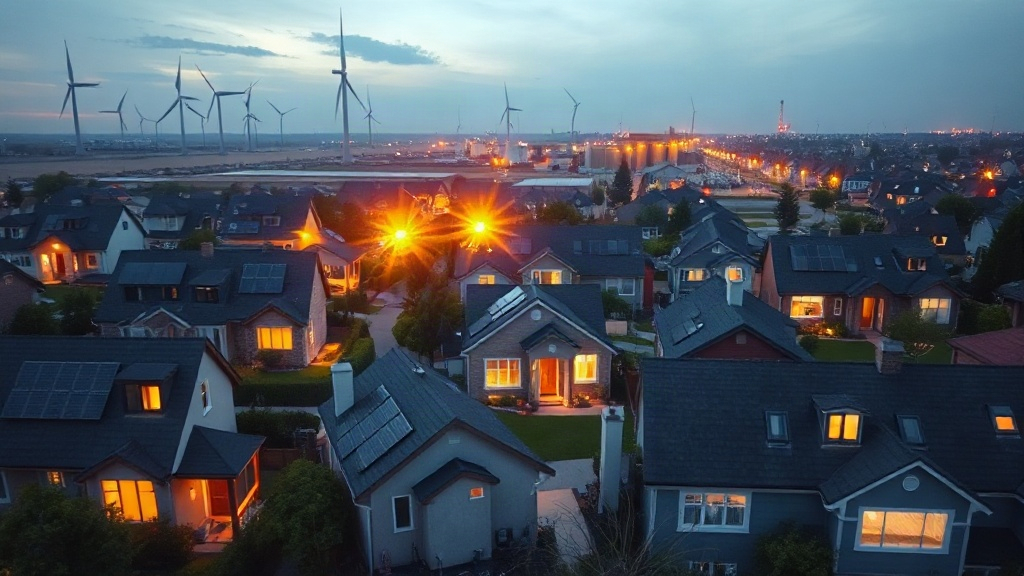
When we think about tackling climate change, massive industrial shifts and international treaties often dominate the conversation. Yet a growing body of research suggests that the most powerful lever for change might be sitting quietly in our living rooms, kitchens, and basements. According to recent studies, subtle adjustments in how households use electricity could add up to a surprisingly large impact, potentially eliminating the need to build new gas-fired power plants altogether.
The finding comes from energy analysts who have been tracking consumption patterns at the residential level. By examining when and how homes draw power from the grid, they've identified a pattern that is both simple and profound: if enough households shift their usage to times when renewable energy is abundant, the collective effect can reduce peak demand enough to avoid firing up additional fossil fuel plants. This isn't about drastic lifestyle changes or expensive upgrades. It's about timing, small habit tweaks, and the ripple effect of millions of people making similar choices.
The Hidden Power of Collective Action
At first glance, one household adjusting its thermostat or running the dishwasher at a different hour seems inconsequential. But when multiplied across a city, a state, or a nation, the numbers become staggering. Energy grids are designed to meet peak demand, those few hours when everyone cranks up the air conditioning or plugs in their electric vehicles after work. To handle those spikes, utilities often rely on peaker plants, which are typically powered by natural gas and are expensive and polluting to operate.
If even a fraction of households shifted their heavy electricity use to off-peak times, say, running appliances in the morning or late at night, the peak would flatten. That means fewer peaker plants would be needed, and in some cases, planned new gas plants could be shelved entirely. The research underscores a key insight: the collective impact of household energy shifts is not just about individual savings; it's about reshaping the entire energy demand curve.
Why Timing Matters More Than You Think
The grid is a delicate balancing act. Electricity must be generated the moment it's needed, and storage is still limited in many regions. When demand surges, utilities scramble to bring additional generation online. Renewable sources like solar and wind are variable, they don't always produce at peak times. But if demand can be shifted to when renewables are plentiful, the need for fossil backup drops dramatically.
Consider this: in many areas, solar power peaks in the early afternoon, while household demand peaks in the early evening. That mismatch forces utilities to ramp up gas plants. If households could shift some of their evening usage to the afternoon, by pre-cooling homes, delaying laundry, or scheduling electric vehicle charging, the evening peak would shrink. Multiply that by thousands of homes, and the effect is transformative.
Real-World Examples and Emerging Trends
Some regions are already seeing the benefits. In California, for instance, flex alerts encourage residents to reduce energy use during critical hours. During a recent heatwave, widespread response to these alerts helped avoid rolling blackouts and reduced reliance on gas peakers. Similarly, in Europe, demand response programs have shown that households can be active participants in grid stability.
Technology is making it easier than ever. Smart thermostats, connected appliances, and home energy management systems allow automatic adjustments based on grid conditions or price signals. Electric vehicles, with their large batteries, can be charged when demand is low and even send power back to the grid during peaks. These tools turn individual homes into a virtual power plant, a network of distributed resources that can be coordinated to benefit everyone.
But technology alone isn't enough. Behavioral shifts are crucial. Studies show that feedback, such as real-time energy usage displays or comparative bills, can prompt people to reduce consumption. Community-based programs and incentives can amplify these effects. When neighbors see each other making changes, it creates a social norm that spreads.
The Economic and Environmental Payoff
The implications are enormous. Avoiding new gas plants saves billions in capital costs, which can be passed on to ratepayers. It also reduces greenhouse gas emissions and air pollution, leading to better public health. Moreover, a more flexible grid is more resilient, better able to integrate renewable energy and withstand disruptions.
For individual households, the benefits are tangible: lower bills, increased comfort, and the satisfaction of contributing to a cleaner future. And unlike many climate solutions, this one doesn't require waiting for new technology or policy. It's available now, through simple changes in daily routines.
How to Make a Difference from Your Home
Ready to be part of the solution? Here are practical steps you can take today to shift your energy use and join the collective impact.
- Shift appliance use: Run dishwashers, washing machines, and dryers during off-peak hours, typically early morning or late evening. Many utilities offer lower rates during these times.
- Adjust your thermostat: Use a programmable or smart thermostat to pre-cool or pre-heat your home before peak periods, then reduce usage during peak.
- Charge smart: If you have an electric vehicle, schedule charging for overnight or when renewable energy is abundant. Some utilities offer special EV rates.
- Reduce standby power: Unplug electronics or use power strips to eliminate phantom loads, which can account for up to 10% of household electricity use.
- Invest in efficiency: LED lighting, energy-efficient appliances, and proper insulation reduce overall demand, making shifts even more effective.
- Engage with your utility: Ask about demand response programs, time-of-use rates, and incentives for smart devices.
These actions may seem small, but when adopted widely, they add up. The research suggests that if just 10% of households shifted 10% of their peak usage, the reduction in peak demand could be equivalent to the output of several gas plants.
The Road Ahead
Policymakers and utilities are taking notice. Some are redesigning rate structures to encourage load shifting. Others are investing in grid modernization to better communicate with smart devices. But the pace could be faster. Advocates argue that more education and incentives are needed to unlock the full potential of household energy shifts.
Ultimately, the power to change the energy landscape lies not just in the hands of corporations or governments, but in the everyday choices of millions. The astonishing collective impact of household energy shifts is a reminder that small actions, multiplied, can move mountains. As researchers continue to refine their models, one thing is clear: our homes are not just places of consumption; they are potential engines of change.
Frequently Asked Questions
What exactly is a household energy shift?
A household energy shift refers to changing the timing of when you use electricity, such as running appliances or charging devices during off-peak hours instead of peak hours. It can also include reducing overall consumption through efficiency measures. The goal is to align usage with times when renewable energy is abundant or when the grid is under less stress.
How can shifting my energy use eliminate the need for new gas plants?
Utilities plan for peak demand, the highest point of electricity use. If enough households shift their usage away from peak times, the peak demand decreases. This reduces the need for peaker plants, which are often gas-fired, and can make planned new gas plants unnecessary. It's a matter of scaling: many small shifts add up to a large reduction.
Do I need smart home technology to participate?
Not necessarily. You can manually shift activities, like doing laundry in the morning or setting a timer on your dishwasher. However, smart thermostats and connected appliances make it easier and more automatic. Many utilities offer rebates for these devices.
Will shifting my energy use really make a difference?
Yes, when done collectively. Your individual shift may be small, but when multiplied across thousands of homes, the impact is significant. It's a classic case of the tragedy of the commons in reverse: collective action for the common good. Plus, you'll likely save money on your energy bills.
What are the biggest barriers to widespread adoption?
Barriers include lack of awareness, inertia, and rate structures that don't reward shifting. Some people also face time constraints or live in rental housing where they can't make upgrades. Overcoming these requires education, incentives, and policy changes. But momentum is growing as more people recognize the benefits.