
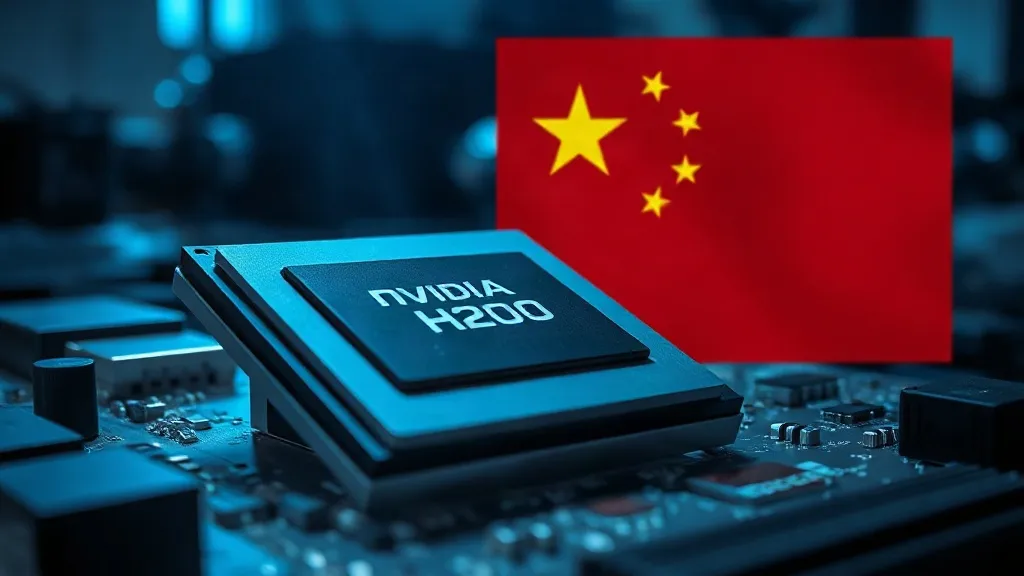
In a development that underscores the difficulties of enforcing technology export restrictions, a Chinese university with reported links to the People's Liberation Army (PLA) has allegedly purchased Nvidia's advanced H200 graphics processing units (GPUs), according to a Reuters report. The acquisition, which supposedly occurred despite U.S. export controls aimed at preventing China from accessing cutting-edge AI chips, raises fresh questions about the effectiveness of such measures and the ongoing technological rivalry between Washington and Beijing.
The H200: A Coveted AI Chip
Nvidia's H200 is one of the most powerful GPUs available for artificial intelligence workloads, designed to accelerate training and inference for large language models and other AI applications. It builds on the Hopper architecture, offering significant performance improvements over its predecessor, the H100. The H200's capabilities make it highly sought after by research institutions and tech companies worldwide, but its export to China is restricted under U.S. regulations introduced in 2022 and subsequently tightened.
The U.S. Department of Commerce's Bureau of Industry and Security (BIS) has imposed licensing requirements on exports of advanced AI chips to China, citing national security concerns. These controls target chips with certain performance thresholds, aiming to hinder China's military modernization and AI development. However, the reported acquisition of H200 chips by a PLA-linked university suggests that such controls may be circumvented through various channels.
The University and Its PLA Connections
The university in question has not been explicitly named in the Reuters report, but it is described as having ties to the PLA, likely through research collaborations or funding. Several Chinese universities, such as the National University of Defense Technology (NUDT), are known for their close relationships with the military and have been involved in defense-related research. These institutions often serve as incubators for technologies with dual-use potential, including AI and high-performance computing.
If confirmed, the purchase would indicate that despite strict export controls, entities affiliated with the Chinese military can still obtain advanced American technology. This could be through intermediaries, front companies, or by exploiting loopholes in the regulations. The H200 chips might have been acquired before the latest restrictions took effect, or they could have been sourced through third-party resellers in countries not subject to the same controls.
Implications for U.S. Export Controls
The news comes at a time when the U.S. is ramping up efforts to curb China's access to critical technologies. In October 2023, the Biden administration announced updates to export controls, expanding the scope of restricted chips and closing some loopholes. The goal is to prevent China from acquiring chips that could be used in military applications, such as developing autonomous weapons systems or enhancing surveillance capabilities.
However, enforcing these controls is challenging, especially when dealing with sophisticated supply chains and determined actors. Nvidia has stated that it complies with all applicable export regulations and that its sales are conducted through authorized channels. Yet, the global nature of the semiconductor industry means that chips can change hands multiple times before reaching their final destination. Export controls are only as effective as the enforcement mechanisms behind them, and tracking the end-use of every chip is a monumental task.
Moreover, the incident highlights the tension between economic interests and national security. Nvidia has repeatedly warned that overly broad restrictions could harm the U.S. semiconductor industry by cutting off access to a massive market. The company has developed China-specific chips, such as the H800 and A800, to comply with export rules while still serving Chinese customers. But the H200 is not among those compliant models, making its reported acquisition particularly noteworthy.
The Broader AI Arms Race
The alleged purchase also underscores the fierce AI competition between the U.S. and China. Both countries view artificial intelligence as a strategic technology with far-reaching implications for economic growth and military power. China has invested heavily in AI research and development, aiming to become a global leader by 2030. Access to advanced chips like the H200 is crucial for training large AI models, which underpin advancements in everything from natural language processing to computer vision.
The U.S. has sought to maintain its edge by restricting China's access to cutting-edge semiconductors and the tools needed to manufacture them. In addition to export controls, the U.S. has persuaded allies like the Netherlands and Japan to impose similar restrictions on semiconductor equipment exports. These coordinated efforts are designed to slow China's progress in AI and other sensitive technologies.
Yet, China has responded by accelerating its domestic chip industry. Companies like Huawei and SMIC are working on advanced chips, although they still lag behind Nvidia in performance. The Chinese government has also pledged billions in subsidies to boost local semiconductor production. The reported H200 acquisition suggests that until domestic alternatives mature, China will continue to seek ways to obtain foreign chips, legally or otherwise.
What This Means for the Tech Industry
For Nvidia and other U.S. chipmakers, the incident is a reminder of the complex regulatory landscape they navigate. The company must balance compliance with export controls against the desire to serve global customers. Nvidia has been vocal about the potential unintended consequences of overly restrictive policies, arguing that they could accelerate China's push for self-sufficiency and erode U.S. technological leadership.
Investors and industry watchers will be closely monitoring how the U.S. government responds to this report. If the acquisition is confirmed, it could lead to stricter enforcement, additional regulations, or even sanctions on the entities involved. It might also prompt a review of existing export control lists to ensure they cover the latest chip models.
For Chinese institutions, the episode highlights the risks of relying on foreign technology. Universities and companies may face increased scrutiny and potential penalties if they are found to have violated export controls. This could drive them to accelerate the adoption of domestic chips, even if they are less advanced, to avoid future disruptions.
Conclusion
The reported purchase of Nvidia H200 chips by a PLA-linked university is a stark illustration of the cat-and-mouse game in technology export controls. It shows that while regulations can slow the flow of advanced technology, they are not foolproof. As the U.S. and China continue their strategic competition, the effectiveness of export controls will depend on robust enforcement, international cooperation, and the ability to adapt to evolving circumvention tactics. For now, the incident serves as a cautionary tale for policymakers and a reminder of the high stakes in the global AI race.
Frequently Asked Questions
What are Nvidia H200 chips used for?
Nvidia H200 chips are high-performance GPUs designed for artificial intelligence and high-performance computing tasks. They are used to train large language models, run complex simulations, and accelerate data analytics.
Why does the U.S. restrict exports of advanced chips to China?
The U.S. restricts exports of advanced chips to China to prevent them from being used in military applications and to maintain America's technological advantage. The controls are part of a broader effort to counter China's military modernization and AI development.
How did the university acquire the chips despite the restrictions?
The exact method is unclear, but possible channels include purchasing through intermediaries, acquiring the chips before the restrictions took effect, or sourcing them from third-party resellers in countries not subject to the controls.
What are the penalties for violating U.S. export controls?
Penalties for violating U.S. export controls can include fines, denial of export privileges, and criminal prosecution. Entities found to have violated the regulations may face significant financial penalties and reputational damage.
What impact could this have on U.S.-China tech relations?
This incident could further strain U.S.-China tech relations, leading to tighter export controls and increased scrutiny of Chinese entities. It may also accelerate China's efforts to develop domestic semiconductor capabilities.