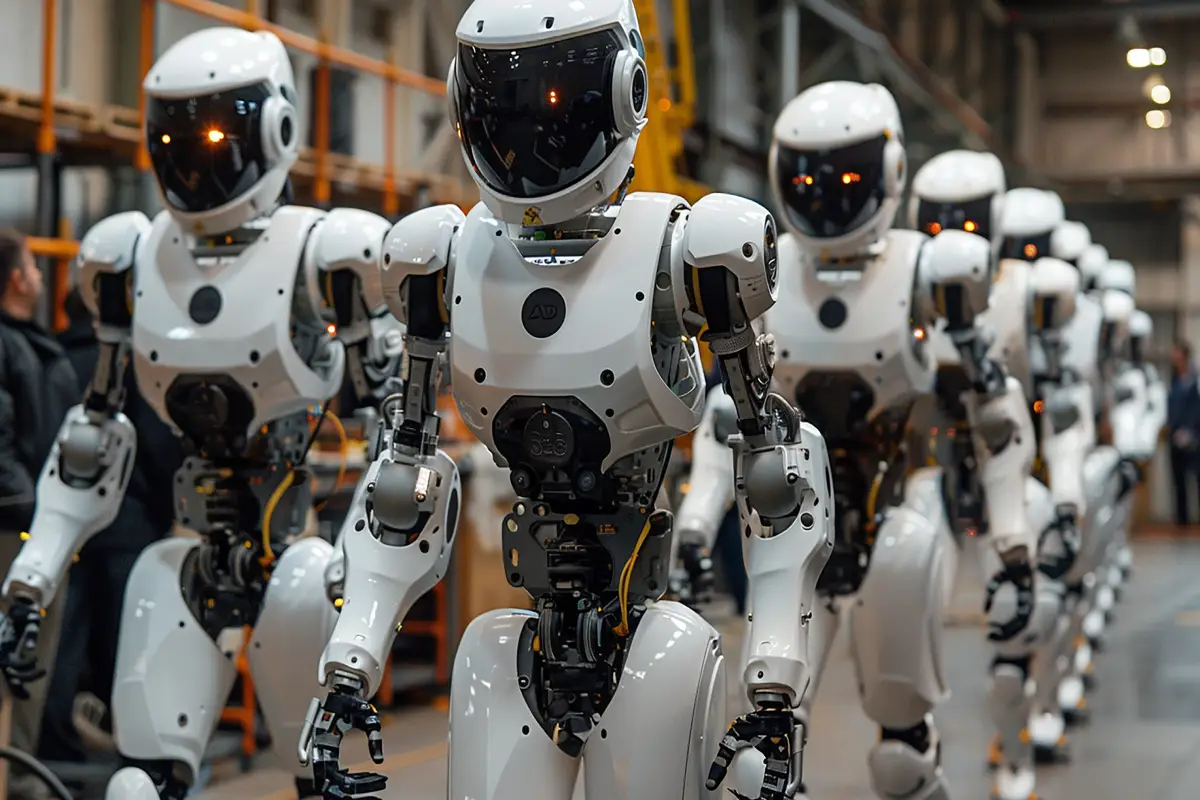
The boundary between science fiction and daily reality has dissolved completely. Walk into a modern logistics fulfillment center, a high-tech manufacturing plant, or even an automated commercial kitchen, and you will witness a silent revolution in motion. Autonomous machines are no longer clumsy prototypes confined to research laboratories; they have integrated into the global supply chain, heavy industry, and consumer sectors with astonishing speed. As we navigate this massive paradigm shift, understanding how
robots are transforming our professional environments and personal lives becomes critical for maintaining a competitive edge in a rapidly evolving market.
This technological integration brings both unprecedented efficiency and deep systemic questions. Businesses are discovering that implementing automated workforce solutions allows them to scale production to levels that were mathematically impossible just a decade ago. However, the true value of this transition does not lie in replacing human capability, but in elevating it. By examining the operational mechanisms, collaborative breakthroughs, and ethical considerations surrounding modern automation, we can better prepare for a future where machine precision and human ingenuity operate in perfect harmony.
The Evolution of Autonomous Systems in Global Industry
The industrial sector has served as the primary proving ground for advanced automation for over half a century. Early iterations of factory machinery were massive, dangerous tools designed to perform singular, repetitive tasks behind heavy safety cages. Today, a new generation of intelligent, sensor-driven systems has emerged, redefining the concept of operational flexibility on the factory floor.
Modern industrial automation relies heavily on machine learning algorithms, computer vision, and real-time data processing. These advancements enable machines to adapt to variations in production lines without requiring extensive manual reprogramming. For instance, in automotive assembly and electronics manufacturing, adaptive machinery can detect structural anomalies, adjust its grip pressure dynamically, and self-correct mechanical alignment mid-cycle, drastically reducing material waste and optimizing throughput.
The Rise of Collaborative Automation and Cobots
One of the most significant shifts in contemporary technology is the transition from isolated machinery to collaborative frameworks. Engineers design collaborative systems, frequently referred to as cobots, to operate alongside human workers without the need for physical isolation barriers. This integration changes the workplace dynamic from displacement to active partnership.
These advanced systems are equipped with high-density spatial sensors, force-limiting mechanisms, and soft structural materials that ensure immediate cessation of movement upon detecting unexpected physical contact. In environments like pharmaceutical laboratories and precision packaging facilities, human operators handle complex qualitative decisions and creative problem-solving, while their mechanical partners manage heavy lifting, high-temperature processing, and micro-scale tasks that demand absolute consistency over long shifts.
Operational Advantages of Deep Automation Integration
Deploying intelligent machinery across enterprise operations yields measurable benefits that extend far beyond simple labor cost reduction. Organizations that successfully transition to automated infrastructure experience systemic improvements in safety, quality control, and long-term asset management.
- Uncompromising Precision: Automated systems execute commands with sub-millimeter accuracy, removing human fatigue from the equation and ensuring that the millionth product off the line is identical to the first.
- Mitigation of Workplace Hazards: Entrusting high-risk tasks like deep-sea exploration, chemical handling, and heavy structural welding to autonomous hardware drastically reduces workplace injuries and insurance liabilities.
- Continuous Resource Optimization: Mechanical workforces can operate continuously in low-light, unheated environments, allowing companies to lower their building energy consumption while maintaining a twenty-four-hour production schedule.
- Data-Driven Predictive Maintenance: Integrated IoT sensors constantly stream operational metrics, allowing systems to predict mechanical wear and schedule self-maintenance before a critical failure occurs.
Addressing the Economic and Workforce Transition
The rapid proliferation of sophisticated hardware understandably triggers economic anxiety regarding job security and structural unemployment. History demonstrates that every major industrial revolution shifts the nature of labor rather than eliminating it entirely, but managing this transition requires deliberate strategy and robust educational pipelines.
As repetitive manual labor becomes automated, the market demand shifts sharply toward technical oversight, systems engineering, digital maintenance, and algorithm optimization. Forward-thinking enterprises are investing heavily in upskilling programs to transition assembly line workers into automation managers and data analysts. The goal is a symbiotic workforce where humans focus on strategic development, empathy-driven customer relations, and creative innovation, leaving the algorithmic execution to dedicated hardware platforms.
Navigating Ethical Frameworks and Future Horizons
As machines gain higher levels of situational awareness and decision-making autonomy, establishing strict ethical and operational boundaries becomes paramount. The integration of artificial intelligence with mobile kinetic systems introduces complex questions regarding liability, data privacy, and systemic security that the global tech sector must proactively address.
Developing universal safety standards, transparent operational logging, and secure edge-computing architectures is essential to protect industrial networks from malicious interference. Furthermore, developers must ensure that the software guiding these physical entities remains unbiased, predictable, and fully subservient to human override protocols. Cultivating trust through transparency is the only viable path forward for widespread social and commercial adoption.
Frequently Asked Questions
What is the primary difference between traditional industrial machinery and smart cobots?
Traditional industrial machinery is designed for high-speed, isolated execution of singular tasks and requires physical safety cages to protect human workers from severe injury. Smart cobots, or collaborative systems, feature advanced spatial sensors, force-feedback limitations, and adaptive programming that allow them to work safely in shared environments alongside human personnel, adjusting their behavior in real time based on human proximity.
How do modern autonomous systems impact overall supply chain reliability?
Modern autonomous hardware significantly stabilizes supply chains by providing predictable, continuous output rates regardless of labor shortages or external disruptions. Because these systems stream real-time operational data, logistics managers can pinpoint bottlenecks instantly, optimize inventory routing dynamically, and maintain strict quality control metrics across multiple global fulfillment hubs simultaneously.
Is it expensive for small to medium businesses to adopt advanced automation?
While the initial capital expenditure for bespoke automated systems historically restricted adoption to massive corporations, the rise of modular hardware, standardized software ecosystems, and automation-as-a-service business models has drastically lowered financial barriers. Small and medium enterprises can now deploy scalable, off-the-shelf mechanical solutions that deliver a rapid return on investment through increased throughput and reduced waste.
What roles will human workers play in an increasingly automated economy?
Human workers will increasingly shift into high-value positions that demand emotional intelligence, strategic thinking, creative design, and complex problem-solving. While
robots manage standardized, repetitive, and hazardous tasks, human professionals will occupy essential roles in systems architecture, predictive maintenance management, ethical oversight, and qualitative customer experience optimization.
Embracing the automated era does not mean erasing the human element from global industry; it means liberating human potential from mundane, exhausting labor. By integrating advanced
robots into your broader operational framework, you unlock new levels of precision, safety, and scalable productivity. Here at Major Daily, we remain committed to analyzing the cutting-edge developments that redefine the intersection of humanity and technology. Explore your operational workflows today, identify the bottlenecks holding your team back, and harness the transformative power of modern engineering to build a more resilient future.