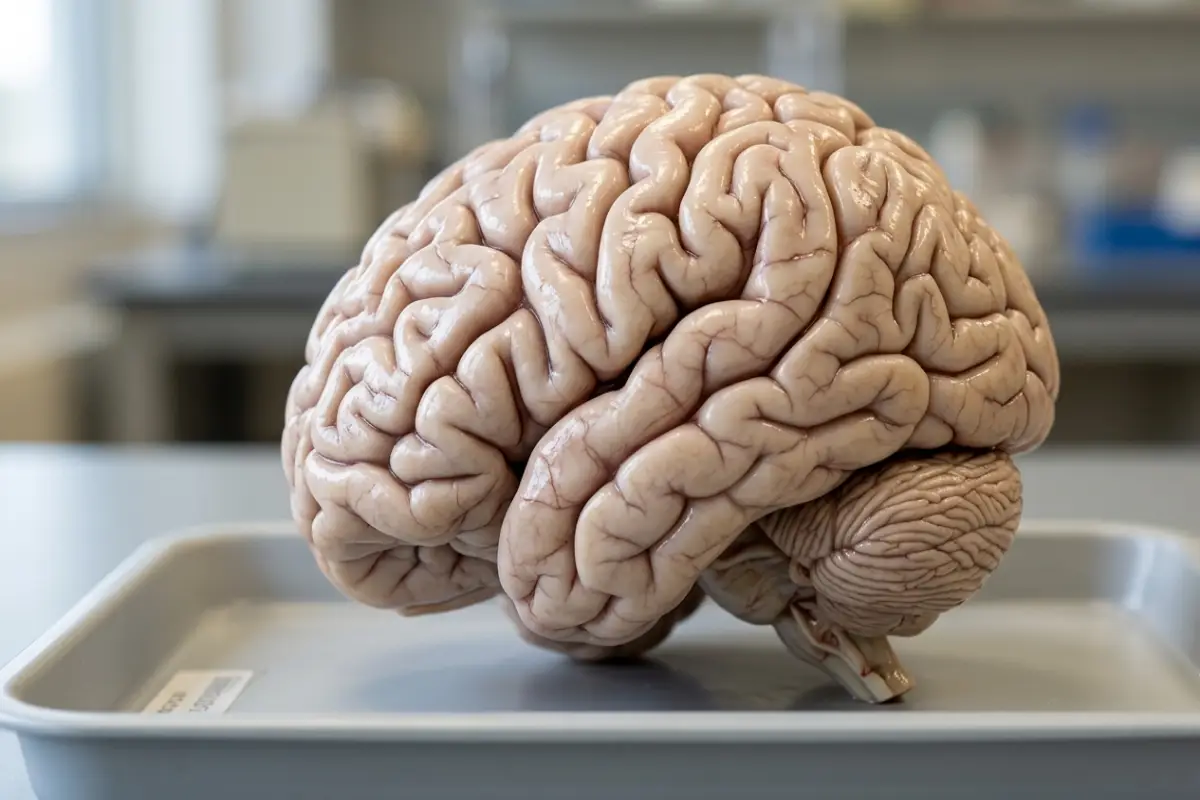
The human mind is arguably the most complex structure in the known universe, acting as the control center for every technological marvel, artistic masterpiece, and scientific breakthrough throughout history. However, understanding how we developed this incredible cognitive capacity requires us to look millions of years into the past. The story of Human Brain Evolution is not a simple, linear progression from primitive primates to modern thinkers. Instead, it is a dramatic narrative driven by radical environmental shifts, dietary breakthroughs, and intense social pressures that forced our ancestors to adapt or face extinction.
For decades, researchers have puzzled over the exact mechanisms that allowed our lineage to develop a brain that is roughly three times larger than expected for an animal of our body size. At Major Daily, we believe that exploring these deep historical roots provides invaluable context for understanding modern human behavior, intelligence, and our unique relationship with technology. By analyzing the fossil record, genetic data, and archeological findings, we can begin to piece together the extraordinary milestones that shaped our minds and ultimately allowed Homo sapiens to dominate the planet.
The Ecological Catalysts and Environmental Pressures
The journey of our cognitive development began with massive climate shifts in Africa millions of years ago. As dense, continuous tropical rainforests began to recede due to global cooling and drying trends, they were replaced by vast, open savannas and mosaic landscapes. This environmental transformation presented our early ancestors with a profound crisis, as the resources they had relied on for survival became increasingly scarce and scattered across large distances.
To survive in this new, predatory environment, early hominins had to abandon a purely tree-dwelling lifestyle and adapt to life on the ground. Bipedalism, or walking upright on two legs, emerged as a critical adaptation. Walking upright freed the hands, allowing our ancestors to carry food, protect their young, and eventually fashion primitive tools. More importantly, this shift altered the biomechanics of the body, creating a physical foundation that could support a heavier, more complex skull over time. The savanna became a rigorous testing ground where individuals with greater spatial awareness, problem-solving abilities, and adaptability were far more likely to survive and pass on their genetic material.
The Dietary Revolution and the Expensive Tissue Hypothesis
One of the most significant hurdles in the path of expanding cognitive capacity is the sheer energy requirement of neural tissue. In modern humans, the brain accounts for only about two percent of total body weight, yet it consumes roughly twenty percent of the body's metabolic energy. How did our ancestors manage to fuel such an expensive organ without starving?
The answer lies in a major dietary shift that occurred with the emergence of early Homo species. Ancestors like Homo habilis and Homo erectus began to incorporate high-quality, nutrient-dense foods into their diets, moving away from a reliance on tough, fibrous plant material. The introduction of animal meat and fat, obtained through scavenging and hunting, provided a massive influx of calories, essential fatty acids, and proteins. According to the Expensive Tissue Hypothesis, this high-quality diet allowed our digestive tracts to shrink over evolutionary time. Because the gut is another highly energy-consuming organ, its reduction freed up metabolic resources that could then be redirected to fuel an expanding brain.
The Mastery of Fire and the Impact of Cooking
While meat consumption provided the initial spark, it was the control of fire and the invention of cooking that truly accelerated our development. Cooking acts as a form of external digestion, breaking down complex proteins and carbohydrates, neutralizing toxins, and making food significantly easier to chew and absorb. This technological breakthrough meant that our ancestors could extract far more net energy from their food while spending a fraction of the time and energy chewing it.
With more calories available and less physical energy expended on digestion, the metabolic constraints on brain growth were effectively shattered. Cooking also had profound social implications. Gathering around a centralized hearth for safety and warmth created a predictable social environment. These communal settings encouraged communication, cooperative planning, and storytelling, which added a powerful layer of social selection to the ongoing process of neurological refinement.
Social Complexity and the Machiavellian Intelligence Hypothesis
While environment and diet provided the physical means for growth, many evolutionary biologists argue that the primary driving force behind our exceptional intelligence was social rather than ecological. The Machiavellian Intelligence Hypothesis, also known as the Social Brain Hypothesis, suggests that managing complex interpersonal relationships within expanding tribal groups placed the highest cognitive demands on early humans.
Living in cooperative groups offers immense survival benefits, including shared predator defense, collaborative hunting, and communal child-rearing. However, group living also introduces intense internal competition. To thrive within a tribe, an individual must be capable of tracking social hierarchies, forming alliances, detecting deception, and practicing empathy. This ongoing psychological chess match required a massive expansion of the neocortex, the area of the brain responsible for higher-order functions such as conscious thought, language, and decision-making. Over generations, the need to navigate the intricate web of human society acted as a powerful evolutionary accelerator.
The Toolmaker Paradigm and Material Culture
The physical manifestation of our evolving intelligence is preserved in the stone tools scattered across the archaeological record. The transition from the simple, fractured river cobbles of the Oldowan tool culture to the symmetrical, meticulously crafted handaxes of the Acheulean culture represents a massive leap in cognitive sophistication. Crafting an Acheulean handaxe requires a mental blueprint, sequential planning, and precise motor control, indicating that early humans could visualize an objective before striking the stone.
This relationship between the mind and material culture created a powerful feedback loop. As our ancestors designed more complex tools, they altered their physical environment, which in types created new cognitive challenges. The brain did not evolve in a vacuum; it co-evolved alongside our technologies. This ancient relationship forms the historical bedrock of the modern human experience, where our minds are continuously adapting to use, interpret, and shape the tools we create.
Frequently Asked Questions
Did our brain size increase at a steady, uniform rate throughout history?
No, the expansion was not uniform. The fossil record indicates long periods of relative stability punctuated by bursts of rapid growth. For example, during the transition from Australopithecus to the genus Homo around two million years ago, and later during the emergence of Homo heidelbergensis and Homo sapiens, we observe significant leaps in cranial capacity that often coincide with major global climate fluctuations and technological advancements.
Are modern human brains larger than those of our ancient ancestors?
Interestingly, modern human brains are actually slightly smaller on average than those of Homo sapiens who lived around twenty thousand years ago, as well as those of Neanderthals. Scientists believe this reduction is not a sign of declining intelligence but rather an indicator of increased efficiency, neural reorganization, and the rise of collective intelligence, where a society shares knowledge so that a single individual does not need to store everything internally.
What role did genetics play in the expansion of our cognitive abilities?
Specific genetic mutations played a foundational role by altering how brain cells divide and multiply during embryonic development. Human-specific genes, such as NOTCH2NL and ARHGAP11B, have been identified as key drivers that allowed the human neocortex to expand dramatically by generating a much higher volume of cortical neurons compared to our closest living primate relatives.
How does understanding early neurological history help us today?
Studying this history allows us to recognize the deep evolutionary mismatches in modern life. Our minds were shaped for a world of close-knit social groups, physical movement, and natural environments. Understanding these ancient roots helps us design better educational frameworks, improve mental health practices, and manage our interaction with digital technologies in a way that respects our biological limitations.
The remarkable chronicle of Human Brain Evolution serves as a powerful reminder of our species' inherent adaptability and resilience. From the dry savannas of Africa to the complex digital networks of the modern world, our minds have consistently evolved to overcome the most daunting challenges. Here at Major Daily, we believe that understanding this profound heritage is essential for navigating the future of human potential. By honoring our evolutionary past and managing our modern environments with intention, we can continue to cultivate a healthier, sharper, and more connected human experience for generations to come.