
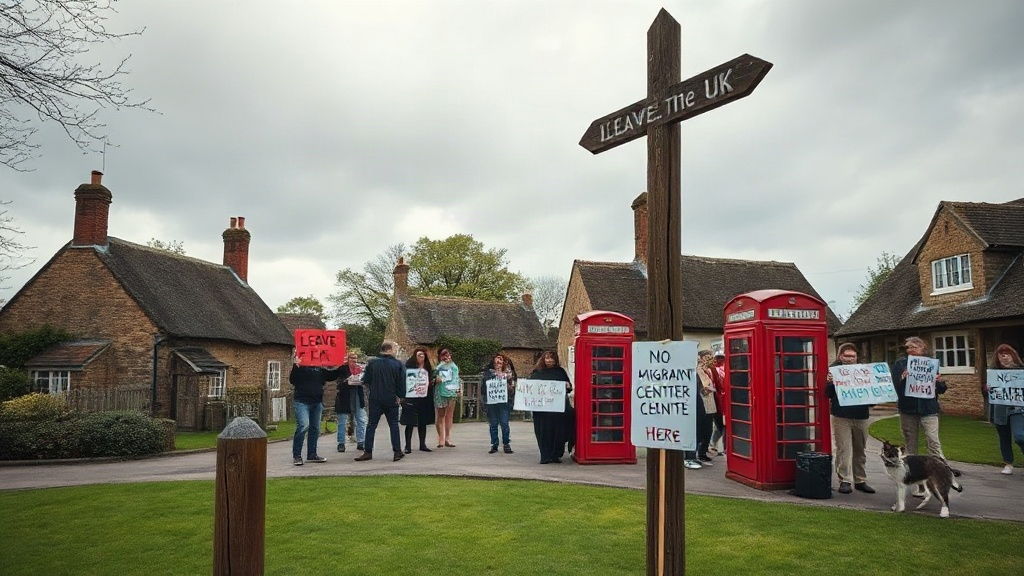
In a move that has captured national attention, the residents of Piddington, a tiny village in Oxfordshire with just a few hundred souls, have voted overwhelmingly to leave the United Kingdom. The reason? A government proposal to convert the nearby Bicester barracks into accommodation for up to 1,250 asylum seekers. The vote, held in the village hall on a rainy Tuesday evening, is not legally binding, but it has become a powerful symbol of rural discontent over immigration policy and the perceived lack of consultation from Westminster.
The decision to hold a referendum was taken at a packed parish council meeting last month, after news emerged that the Home Office was considering the site for migrant housing. Villagers expressed fears about the impact on local services, infrastructure, and the character of their community. The final count showed 87 percent in favour of secession, with a turnout of 74 percent, figures that would make any politician sit up and take notice.
Why Piddington said 'enough'
Piddington is the kind of place where everyone knows their neighbour's name. It has a 12th-century church, a village green, and a pub that has been serving ale since the 1600s. But residents say the proposed migrant centre would change the village forever. The Bicester barracks, located about three miles away, was used by the military until 2019 and has since fallen into disrepair. The government sees it as a cost-effective solution to the growing backlog of asylum claims, but locals see it as an imposition with no thought for their way of life.
"We are not against helping people in need," said one villager, who asked not to be named. "But dropping 1,250 people into a rural area with no jobs, no transport, and no support network is a recipe for disaster. They would be isolated, and we would be overwhelmed." Such sentiments are echoed by many in the village, where the population is predominantly elderly and public transport is sparse.
The vote to secede was, by all accounts, a gesture born of frustration. The village has no legal mechanism to leave the UK, and the government has shown no sign of reversing its plans. But the symbolism is clear: if the state will not listen to local voices, then perhaps the state's authority itself can be questioned.
The wider context: rural England's unease
Piddington is not alone in its discontent. Across rural England, communities have pushed back against asylum accommodation in former barracks, hotels, and even holiday parks. The use of such sites has become a flashpoint in the debate over immigration, with critics arguing that the government is offloading its responsibilities onto areas least equipped to handle them.
In 2023, the Home Office announced plans to use former military bases to house asylum seekers as a way to reduce reliance on expensive hotels. Bicester was one of the sites identified, along with locations in Lincolnshire and Essex. The policy has been met with legal challenges and local protests, but the government has remained committed, citing the need to manage the asylum system efficiently.
For Piddington, the issue is not just about asylum seekers; it is about a broader sense of being ignored. Many residents feel that decisions are made in London without any real understanding of rural life. The vote to secede is as much a protest against that disconnect as it is against the specific plan for Bicester barracks.
What happens next?
Legally, Piddington's vote means nothing. The village will remain part of the United Kingdom, and the Home Office will continue with its assessments of the Bicester site. But politically, the gesture has already had an impact. Local MP Victoria Prentis has called for urgent talks with the Home Secretary, and the parish council has vowed to fight the plans through every available channel, including judicial review.
There is also the question of whether other villages might follow suit. Social media has been buzzing with suggestions of similar votes in other rural communities, though none have yet been formally proposed. Whether this is the start of a movement or a one-off act of defiance remains to be seen.
One thing is certain: the people of Piddington have made their voices heard, and they are not backing down. As one resident put it, "We may be small, but we are not invisible. If they want to put a migrant centre here, they will have to get past us first."
Could Piddington actually leave the UK?
The short answer is no. The United Kingdom is a sovereign state, and its constituent parts do not have a unilateral right to secede. Even Scotland, with its own parliament and legal system, would require a referendum agreed by Westminster to become independent. For a village like Piddington, there is no constitutional mechanism for leaving the UK. The vote is purely symbolic.
However, the gesture has historical echoes. In 1977, the Cornish town of St Just declared itself an independent republic in protest at government policies, and in 2008, the island of Eigg in Scotland briefly declared independence over a land dispute. Such acts are often used to draw media attention and pressure politicians, and Piddington's vote has certainly succeeded on that front.
What does the Home Office say?
The Home Office has declined to comment on the specific vote, but a spokesperson reiterated that the government is committed to "fair and humane" asylum policies and that all sites are assessed for suitability. They added that local communities are consulted as part of the planning process, though critics argue that such consultations are often perfunctory.
For now, the Bicester barracks plan remains under review, and no final decision has been made. But the villagers of Piddington are not waiting. They have already started fundraising for a legal challenge and have vowed to hold further protests if necessary.
Lessons from Piddington
Whatever the outcome, the Piddington vote serves as a reminder that rural communities are not passive bystanders in national debates. They have concerns, they have voices, and they are willing to use unconventional methods to be heard. The challenge for the government is to balance the need for asylum accommodation with the legitimate interests of local residents.
As the saga unfolds, one thing is clear: this tiny Oxfordshire village has punched well above its weight, and its symbolic declaration of independence will be talked about for years to come.
Frequently Asked Questions
Is Piddington really leaving the UK?
No, the vote is purely symbolic. Piddington has no legal authority to secede from the United Kingdom. The vote was a protest against plans to house asylum seekers at nearby Bicester barracks.
Why are Piddington residents opposed to the migrant housing plan?
Residents cite concerns about the impact on local services, infrastructure, and community character. They argue that a rural village with limited resources cannot support 1,250 new arrivals and that the government failed to consult them properly.
How many people voted in the Piddington referendum?
Turnout was 74 percent of eligible voters, and 87 percent voted in favour of leaving the UK. The village has a population of around 400 adults.
What is the Bicester barracks plan?
The Home Office is considering converting the former military site at Bicester, near Piddington, into accommodation for up to 1,250 asylum seekers. The plan is part of a wider policy to use former barracks to reduce hotel costs.
What can Piddington do next?
The parish council is considering legal action, including a judicial review of the government's decision-making process. They are also fundraising and planning further protests to keep the issue in the public eye.