
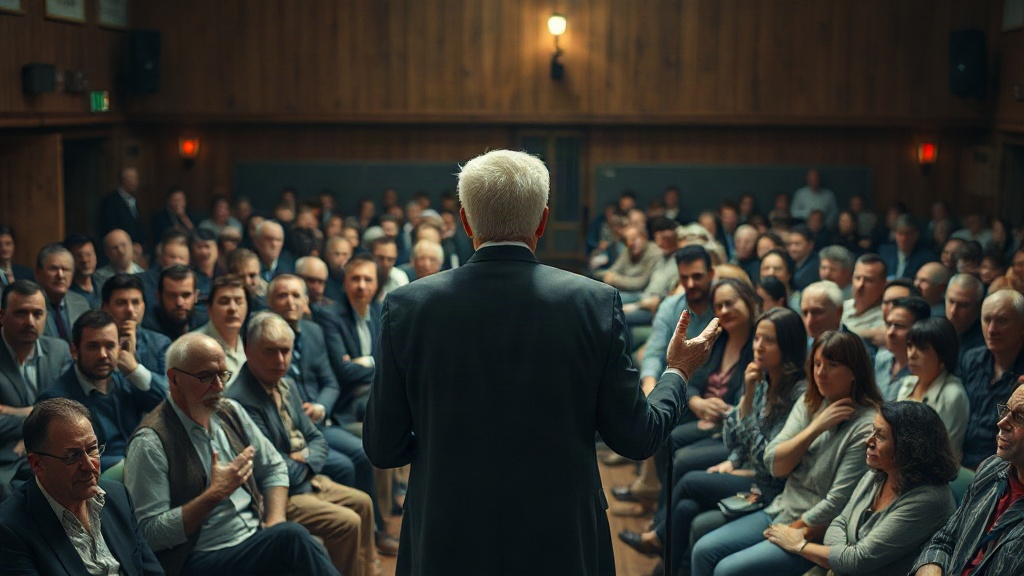
The atmosphere inside the hall was tense before a single word was spoken. When Zack Polanski, the leader of the Green Party, took his turn at the microphone, the mood curdled further. According to reports from the hustings, he repeated his view that Zionism is a form of racism, a position that has followed him throughout this campaign. The response from the audience was immediate and visceral: heckles, jeers, and a palpable sense of offence. This was not a typical political meeting. It was a moment where a politician's convictions collided with a community's lived experience, and the fallout is likely to shape the final days of the Holborn and St Pancras byelection.
Polanski, who is Jewish, has long argued that his criticism of Israel is rooted in anti-racism, not antisemitism. He draws a sharp distinction between Judaism as a faith and Zionism as a political ideology. For him, equating the two is a category error. But for many in the Jewish community, Zionism is not merely a political stance; it is an integral part of their identity, a connection to a homeland that has been central to Jewish survival for generations. When Polanski says Zionism is racism, many hear an attack on their very right to self-determination. That chasm was on full display at the hustings.
The Hustings: A Stage for Disagreement
Hustings are supposed to be a chance for voters to hear from candidates, to probe their policies, and to make an informed choice. But last night's event, held in a Jewish community setting, became something else entirely. It was a space for attendees to express their profound disagreement with Polanski on Israel and Palestine. One attendee, a Labour councillor, even posed a question from the floor, underscoring how politically charged the room was. The event was described as one where most of the audience had already made up their minds before sitting down. In that sense, it was less a debate and more a confrontation.
Polanski did not back down. He defended his position, insisting that his words are not antisemitic but anti-racist. He pointed to his own Jewish heritage and his family's history. Yet the heckling continued. For many in the audience, his explanation rang hollow. They had come to see whether he could understand their fears, their attachment to Israel, and their sense of vulnerability. Instead, they heard a politician doubling down on a phrase that cuts deep.
Why This Matters Beyond the Byelection
The Holborn and St Pancras byelection was already shaping up to be a test of Labour's grip on London and a measure of the Greens' growing appeal. But Polanski's remarks have injected a volatile element into the race. The Jewish community in the constituency is not monolithic, but it is significant, and its concerns are not easily dismissed. For Labour, the episode offers an opportunity to contrast its own position on Israel with what it will portray as Green extremism. For the Greens, it raises questions about whether their leader's rhetoric is a net positive or a liability.
More broadly, this incident reflects a wider reckoning on the left. Since the Hamas attacks of October 7 and the ensuing war in Gaza, progressive parties across Europe have struggled to balance criticism of Israeli government policy with sensitivity to Jewish fears. Polanski's formulation, that Zionism is racism, places him at the most critical end of that spectrum. It is a position that resonates with some activists but alienates many Jewish voters and moderates. The heckling at the hustings is a vivid illustration of that divide.
The Politics of Language and Identity
Words matter in politics, especially when they touch on identity. Polanski's choice to call Zionism a form of racism is not a slip of the tongue. It is a deliberate framing, one that he has used before. He argues that racism is about power and oppression, and that Zionism, as a nationalist project, has resulted in the displacement and oppression of Palestinians. For him, the label is accurate. But for those who see Zionism as a liberation movement, the label is a slur. It denies their history and their connection to the land.
The heckling at the hustings was not just about disagreement; it was about feeling unheard and disrespected. Many in the audience likely have family in Israel. They have watched the news with horror. They have felt the rise in antisemitic incidents in the UK. When a Jewish politician tells them that their identity is racist, it can feel like a betrayal. That emotional response is not irrational; it is deeply human. And it is a reminder that political arguments are never purely intellectual.
What Polanski's Critics Say
Critics argue that Polanski's rhetoric fuels antisemitism, even if that is not his intent. They point out that calling Zionism racism is a tactic used by some to delegitimise Israel's existence. They worry that it emboldens those who would harm Jews. They also note that Polanski, as a Jewish leader, has a particular responsibility to build bridges, not deepen divides. For them, his comments are not brave truth-telling but reckless provocation.
What Polanski's Supporters Say
Supporters counter that Polanski is being unfairly targeted for speaking truth to power. They argue that criticism of Israel is not antisemitism, and that conflating the two shuts down legitimate debate. They see Polanski as a rare politician willing to challenge a taboo, and they applaud his courage. They also point out that many Palestinians and their allies view Zionism as a racist ideology, and that dismissing that view is itself a form of silencing.
The Fallout and What Comes Next
The immediate fallout from the hustings is likely to be a round of recriminations. Labour may use the episode to paint the Greens as out of touch with Jewish voters. The Greens may double down, energising their base. The Jewish community may feel further alienated from the political process. And Polanski himself may find that his words have consequences beyond the campaign trail. Already, there are calls for him to apologise or clarify. Whether he does so remains to be seen.
In the longer term, this episode is a microcosm of a much larger debate about how the left should talk about Israel and Palestine. It raises questions about allyship, about the limits of acceptable criticism, and about the possibility of finding common ground. There are no easy answers. But the heckling at the hustings shows that these are not abstract questions. They are about real people, real fears, and real votes.
Frequently Asked Questions
What exactly did Zack Polanski say about Zionism?
He said that Zionism is a form of racism. He made these remarks during his campaign for the Holborn and St Pancras byelection, and he repeated them at a Jewish community hustings, where he was heckled.
Why was Polanski heckled at the hustings?
Many in the audience strongly disagreed with his characterization of Zionism. They felt offended and disrespected, and they used the hustings as an opportunity to express their disapproval.
Is Polanski's statement considered antisemitic?
That is a matter of intense debate. Polanski and his supporters argue that his criticism of Zionism is anti-racist and not antisemitic. Critics argue that equating Zionism with racism can be a form of antisemitism, as it delegitimises Jewish self-determination.
How might this affect the byelection?
It could mobilise Jewish voters against Polanski and the Greens, and it may provide ammunition for his opponents. However, it could also energise his base and attract voters who support his stance on Israel and Palestine.
What is the Green Party's official position on Israel and Palestine?
The Green Party has historically been critical of Israeli government policy and supportive of Palestinian rights. However, Polanski's specific phrasing goes further than some in the party might be comfortable with. The party has not officially endorsed the view that Zionism is racism.