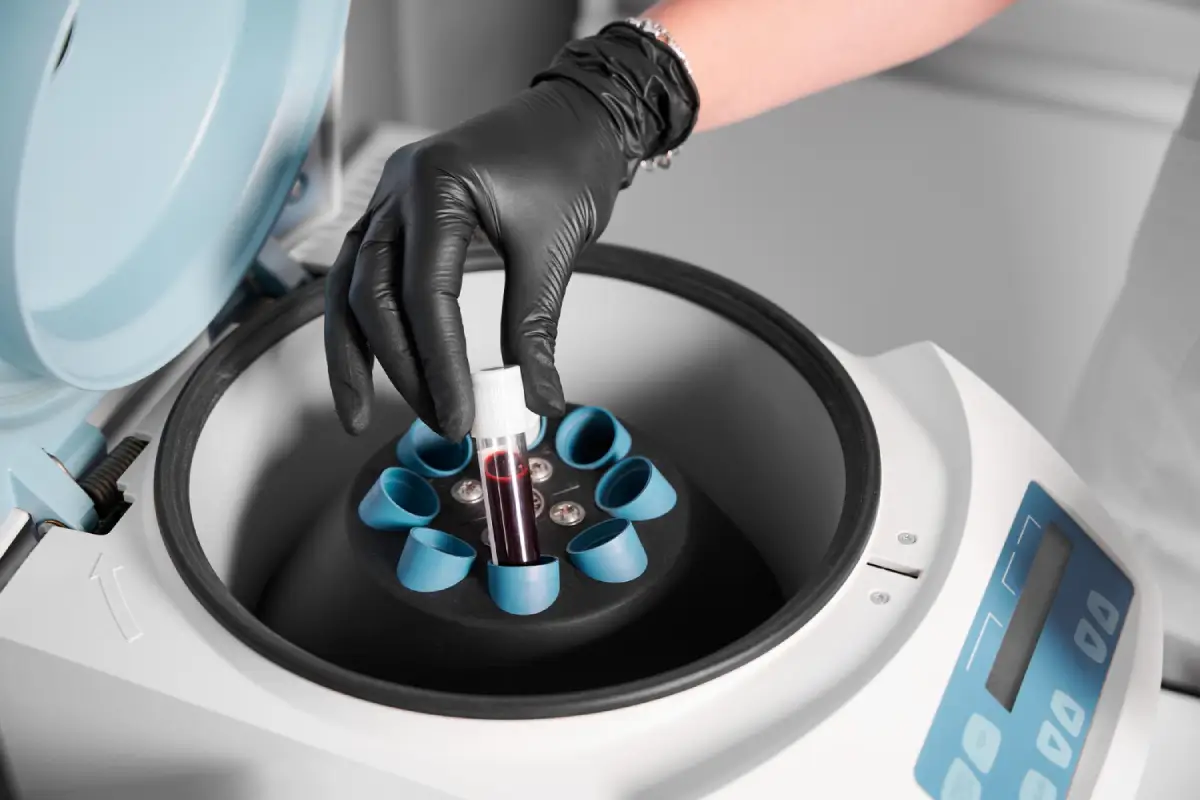
Healthcare is experiencing a quiet yet profound revolution, driven by the convergence of clinical medicine and computational intelligence. For decades, the standard laboratory evaluation has remained relatively unchanged, relying on manual microscopic reviews and isolated biomarker thresholds to identify disease. While these traditional methodologies have saved countless lives, they frequently detect illnesses only after structural damage or clear clinical symptoms have already manifested. In this shifting paradigm, the arrival of the
ai blood test stands out as a monumental breakthrough, fundamentally altering how physicians screen for, diagnose, and monitor complex health conditions. At Major Daily, we closely monitor these transformative shifts in scientific innovation to keep our readers informed about the future of global wellness.
The core limitation of historical blood analysis does not lie in the quality of the fluid collected, but in the human capacity to interpret millions of subtle data points simultaneously. A single vial of blood contains an incredibly complex matrix of proteins, metabolic byproducts, circulating nucleic acids, and cellular variations. Human pathologists are trained to look for outliers, such as a white blood cell count that exceeds a specific numerical limit or a liver enzyme that spikes beyond the standard reference range. However, diseases rarely develop in absolute isolation. An impending metabolic crisis or early-stage malignancy often leaves a distributed, faint signature across dozens of completely different markers. By leveraging advanced machine learning algorithms, modern laboratories can now identify these hidden patterns long before a single traditional marker flags an anomaly.
The Evolution from Reactive Diagnostics to Predictive Medicine
The traditional medical framework has long operated on a reactive basis. A patient experiences fatigue, unexplained weight loss, or localized pain, prompts a visit to a clinic, and undergoes a panel of laboratory tests to confirm a suspected diagnosis. By the time these physiological changes are apparent in a standard lab report, the underlying condition may have already progressed to an advanced stage, requiring aggressive and costly interventions. Utilizing an
ai blood test shifts the entire medical paradigm from reaction to proactive prevention, allowing clinicians to intercept pathologies in their infancy.
Machine learning models excel at longitudinal data analysis, meaning they can track microscopic fluctuations in an individual's biology over several years. Instead of comparing a patient's laboratory results to a generalized, non-specific population average, the computational framework compares the patient's current data to their own historical baseline. A slight, sequential downward trend in a specific cluster of proteins, even if all numbers technically remain within the normal range, can trigger an early alert. This predictive capability gives patients and physicians a vital window of opportunity to implement lifestyle changes, adjust therapies, or order targeted imaging before a clinical crisis materializes.
How Machine Learning Decodes Complex Biomarker Matrices
To understand the sheer power of this technology, it is necessary to examine how neural networks process biological inputs. When a laboratory processes a sample using an
ai blood test protocol, the raw biochemical values are fed into an algorithm that has been trained on millions of diverse patient records. These algorithms do not evaluate numbers sequentially; they analyze them multi-dimensionally, mapping the intricate correlations between seemingly unrelated variables.
For example, a slight elevation in a specific inflammatory marker, combined with a minor shift in red blood cell distribution width and a microscopic change in lipid ratios, might mean very little to a human physician reading a paper report. To a trained deep-learning model, however, that specific combination could represent the definitive mathematical signature of early-stage cardiovascular disease or an emerging autoimmune condition. The algorithm calculates the statistical probability of various health outcomes based on these multi-marker patterns, providing clinicians with a comprehensive risk profile rather than a simple checklist of positive or negative findings.
Key Medical Breakthroughs Driven by Smart Hematology
The practical applications of computational blood analysis are expanding rapidly across multiple medical specialties. Researchers and clinical trials worldwide are demonstrating that integrated algorithms can achieve diagnostic accuracy rates that rival or exceed traditional diagnostic tools, particularly in fields where early detection is notoriously difficult.
- Early-Stage Malignancy Detection: One of the most promising frontiers is the development of liquid biopsies enhanced by machine learning. These systems can isolate fragments of circulating tumor DNA and analyze methylation patterns to identify the presence of various cancers, including pancreatic and ovarian malignancies, at stage one or stage two.
- Neurodegenerative Disease Tracking: Conditions such as Alzheimer's disease have historically required expensive neuroimaging or invasive cerebrospinal fluid draws for accurate diagnosis. Advanced algorithms can now detect ultra-low concentrations of specific axonal proteins and neurofilaments in standard blood draws, flagging cognitive decline risk years before behavioral symptoms appear.
- Cardiovascular Risk Stratification: Beyond standard cholesterol checks, intelligent algorithms evaluate systemic inflammatory patterns and metabolic markers to predict the likelihood of acute cardiac events with unprecedented precision, allowing for highly customized preventative cardiology regimens.
- Metabolic Syndrome Prediction: By analyzing subtle variations in insulin sensitivity, liver enzymes, and lipid sub-fractions, automated systems can forecast a patient's trajectory toward type two diabetes, enabling highly effective dietary and therapeutic interventions.
The Operational and Financial Benefits for Global Healthcare
The widespread integration of the
ai blood test offers systemic advantages that extend far beyond individual patient outcomes. Global healthcare infrastructure is currently under immense strain, facing rising operational costs, widespread diagnostic delays, and severe shortages of specialized medical personnel. Implementing automated, algorithmic screening protocols directly addresses these systemic bottlenecks by streamlining laboratory workflows and optimizing resource allocation.
Because these computational analyses can be executed using existing, standard laboratory equipment, hospitals and clinics do not need to invest millions of dollars in entirely new physical hardware. The primary transformation occurs in the software layer, where data is processed after the physical fluid analysis is complete. This means that high-level, specialized diagnostic insights can be delivered to rural clinics and underserved communities without requiring the physical presence of specialized pathologists. Furthermore, by identifying chronic diseases early, healthcare systems can reduce the need for emergency hospitalizations, intensive care treatments, and prolonged therapeutic interventions, saving billions of dollars annually.
Addressing Data Security, Ethical Guardrails, and E-E-A-T Standards
As with any technological advancement that relies heavily on personal data, the integration of computational algorithms into clinical pathology introduces critical questions regarding patient privacy, data security, and ethical deployment. Medical records are highly sensitive, and ensuring that the data used to train and execute an
ai blood test remains secure is a paramount concern for the global scientific community.
Medical developers must adhere to strict regulatory frameworks, utilizing advanced encryption protocols and decentralized data networks to prevent unauthorized access to patient profiles. Additionally, transparency is vital for establishing clinical trust. Physicians must not view these algorithms as mysterious black boxes; instead, developers must provide clear explanations regarding which biomarker clusters drove a specific risk calculation. Maintaining this level of clinical transparency ensures that human oversight remains the final authority in patient care, combining the rapid processing power of machinery with the ethical judgment of seasoned medical professionals.
Frequently Asked Questions
How accurate is an ai blood test compared to a traditional doctor's review?
An
ai blood test does not replace a doctor's review; rather, it enhances it by processing thousands of variable correlations that a human mind cannot calculate simultaneously. Clinical studies show that these algorithms are highly accurate in detecting subtle patterns, often identifying risks for conditions like metabolic syndrome or early-stage tumors long before standard reference ranges flag a single value as abnormal.
Can this technology detect chronic illnesses before physical symptoms appear?
Yes, this is the primary advantage of integrating machine learning into laboratory diagnostics. By identifying micro-trends and distributed biological signatures across dozens of metabolic, cellular, and inflammatory markers, the software can forecast the development of chronic conditions like type two diabetes, cardiovascular issues, and certain neurodegenerative diseases years before a patient feels sick.
Does an automated blood analysis require a special type of blood draw?
No, one of the most practical aspects of an
ai blood test is that it utilizes the exact same collection methods as standard laboratory testing. The patient undergoes a routine venipuncture at a local clinic. The transformation happens entirely after the sample is analyzed by standard laboratory machines, where the resulting digital data is processed by sophisticated software models.
Will machine learning algorithms eventually replace human pathologists and doctors?
No, the technology is designed to serve as a powerful diagnostic assistant rather than a replacement for human medical expertise. The algorithm excels at data aggregation, pattern recognition, and statistical risk calculation, but interpreting these risks within a patient's unique personal context, lifestyle, and emotional needs requires human empathy, clinical judgment, and ethical oversight.
The integration of advanced computation into everyday clinical diagnostics represents a monumental leap forward for public health. By transforming the standard, reactive lab report into a dynamic tool for predictive medicine, the
ai blood test empowers individuals to take true ownership of their long-term health journeys. Here at Major Daily, we are dedicated to demystifying these complex scientific milestones, ensuring our audience understands the tangible benefits of tomorrow's medical tools. Talk to your healthcare provider about the emerging role of algorithmic diagnostics, stay informed about preventative wellness strategies, and take proactive control of your physiological future today.