
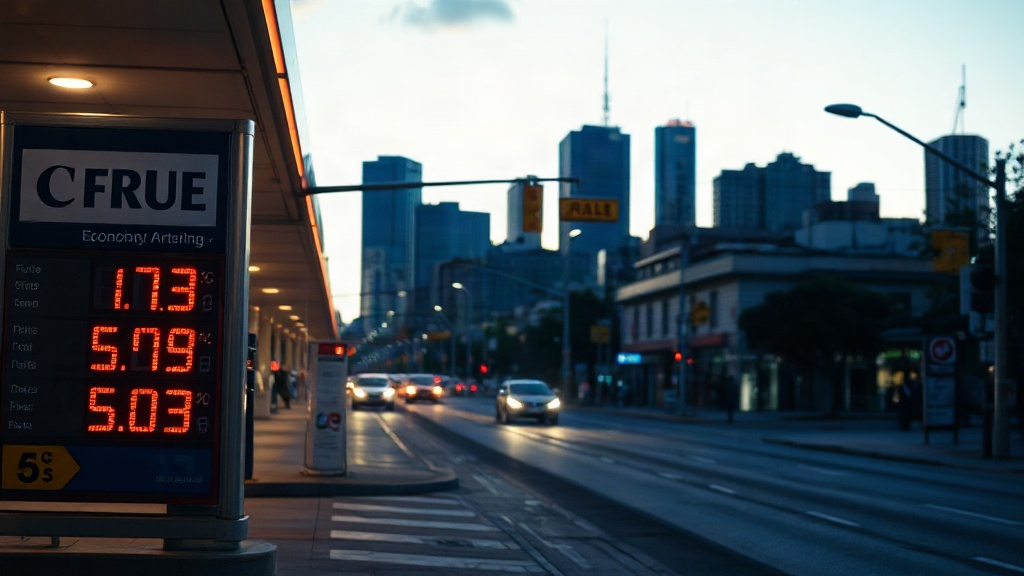
Australian households are facing a double squeeze this week as fuel prices climb and the Reserve Bank of Australia (RBA) prepares to raise the official cash rate to 4.6%, the highest level since 2011. The combination is set to stretch budgets further, with mortgage holders bracing for another increase in repayments and drivers already feeling the pinch at the pump. In Perth, a decomposing whale carcass has prompted shark warnings at a popular beach, adding a local safety concern to the national economic unease.
Fuel Prices on the Rise
Petrol prices have been creeping up across major cities in recent weeks, driven by a mix of international oil market volatility and a weaker Australian dollar. According to the Australian Institute of Petroleum, the national average unleaded price has risen to its highest point in months, with some metropolitan areas seeing prices above $2 per litre. The increase comes as global supply concerns persist, particularly amid ongoing geopolitical tensions and production decisions by major oil exporters.
For Australian motorists, the timing is particularly painful. Many families are already contending with higher costs for groceries, energy, and rent. The fuel hike adds another layer of financial pressure, especially for those in outer suburbs and regional areas where public transport options are limited and car dependency is high. Small businesses, from delivery drivers to tradespeople, also face rising operational costs, which could eventually be passed on to consumers.
Why Fuel Prices Matter for the RBA
The RBA closely monitors fuel prices as part of its inflation assessment. Higher petrol prices feed directly into the consumer price index (CPI), influencing the central bank's decisions on interest rates. While the RBA cannot control global oil markets, it can respond to the inflationary impact through monetary policy. The expected rate hike to 4.6% is partly a response to persistent inflation, which has remained above the target range despite earlier tightening.
RBA Set to Raise Rates Again
The Reserve Bank of Australia is widely expected to increase the cash rate by 25 basis points at its upcoming meeting, taking it to 4.6%. This would mark the highest official rate since 2011 and the latest in a series of increases aimed at curbing inflation. For a typical mortgage holder with a $500,000 loan, the move could add more than $100 to monthly repayments, depending on the lender and the type of loan.
The decision will be scrutinised not only for its immediate impact on borrowers but also for its broader economic implications. Higher interest rates tend to cool spending, which can help bring down inflation, but they also risk slowing the economy too sharply. Some economists argue that the RBA may be nearing the end of its hiking cycle, while others warn that further increases could be necessary if inflation remains stubborn.
Impact on Households and Housing Market
Australian households are already feeling the strain from 12 previous rate hikes. Mortgage stress is rising, particularly in Sydney and Melbourne, where property prices are highest. The expected increase could push more homeowners into financial difficulty, potentially leading to an uptick in distressed sales. However, the housing market has proven resilient so far, with strong population growth and limited supply supporting prices in many areas.
For first-home buyers, the situation is mixed. Higher rates reduce borrowing capacity, but they may also cool competition and slow price growth. Investors, meanwhile, are reassessing their portfolios as yields become less attractive relative to the cost of debt. The RBA's decision will undoubtedly shape the housing market's trajectory in the coming months.
Whale Carcass Prompts Shark Warnings at Perth Beach
In Western Australia, authorities have issued shark warnings after a whale carcass washed ashore at a Perth beach. The decomposing carcass can attract sharks to the area, posing a risk to swimmers and surfers. Local councils and the Department of Primary Industries and Regional Development have advised beachgoers to stay out of the water until further notice.
Whale carcasses are known to draw sharks closer to the shoreline, as they feed on the remains. This phenomenon has been observed in various parts of Australia, often leading to temporary beach closures. While the risk to humans is relatively low, it is not negligible, and authorities are taking precautions to ensure public safety.
What Beachgoers Need to Know
If you're planning to visit a beach in the affected area, it's essential to heed local warnings. Check for signage and listen to advice from lifeguards or local authorities. Avoid swimming or surfing near the carcass, and report any shark sightings to the relevant authorities. The carcass will likely be removed or left to decompose naturally, but until then, caution is advised.
The Broader Economic Picture
The simultaneous rise in fuel prices and interest rates underscores the challenging environment for Australian consumers. Inflation remains the central concern, and the RBA's actions are aimed at bringing it under control. However, the medicine is bitter, and many households are struggling to adjust. The government has faced calls to provide more cost-of-living relief, but with budget constraints, options are limited.
On the positive side, unemployment remains low, and wages are growing, albeit modestly. Australia's economy has shown remarkable resilience, but the coming months will test its ability to withstand further tightening. The RBA's decision will be a key indicator of its confidence in the economy's trajectory.
Frequently Asked Questions
How much will the RBA rate hike increase my mortgage repayments?
For a typical $500,000 mortgage, a 0.25% increase adds roughly $100 to monthly repayments, but the exact amount depends on your lender and loan terms. Use an online mortgage calculator for a personalised estimate.
Why are fuel prices rising in Australia?
Fuel prices are influenced by global oil prices, the Australian dollar's value, and local competition. Recent increases stem from international supply concerns and a weaker dollar, which makes imports more expensive.
Is it safe to swim at Perth beaches after a whale carcass washes ashore?
Authorities advise against swimming near a whale carcass due to increased shark activity. Follow local warnings and avoid the water until the area is declared safe.
Will the RBA continue to raise rates after this meeting?
The RBA's future decisions depend on incoming economic data, particularly inflation and employment figures. While some economists believe rates are near their peak, further increases remain possible if inflation persists.
How can I reduce the impact of rising fuel costs?
Consider using public transport where possible, carpooling, or combining errands to reduce driving. Fuel-efficient driving habits, such as maintaining steady speeds and proper tyre pressure, can also help lower consumption.