
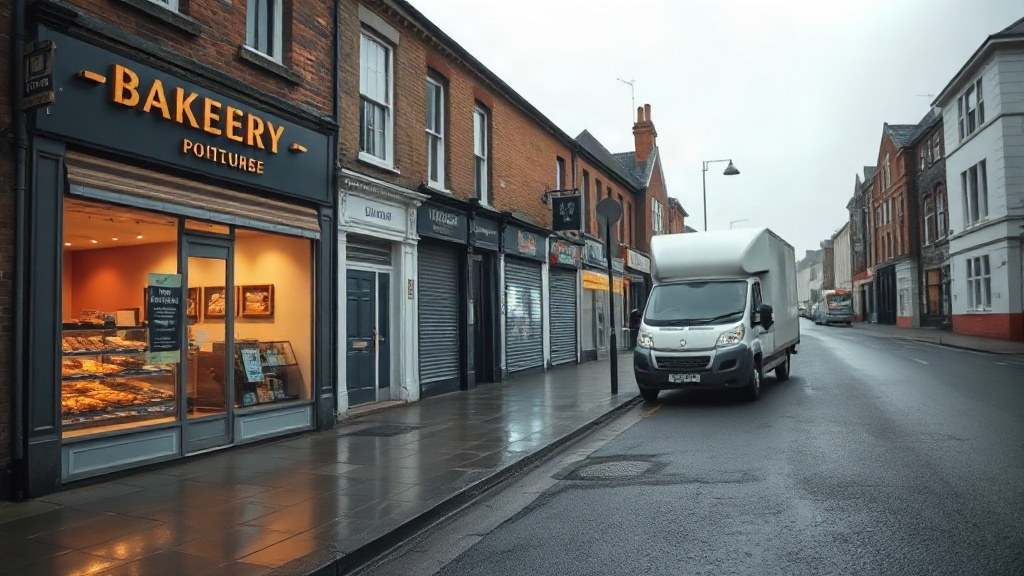
Two pieces of news landed within hours of each other this week, and together they tell a more honest story about the British economy than either one manages alone. The Office for National Statistics revised up its estimate for UK growth in the second quarter, confirming that the economy was slightly larger than first thought over the spring. The same morning, Greggs announced it intends to cut around 740 jobs as it winds down overnight baking in a large share of its shops.
One headline says resilience. The other says restructuring. Both are true, and understanding why they can coexist is more useful than picking a side.
What the Upward Revision Actually Changed
The ONS now estimates that real GDP grew by 0.5% between April and June, up from an initial reading of 0.4%. On paper, a tenth of a percentage point looks like a rounding error. In practice, it matters for two reasons.
First, it changes the starting point for every forecast that follows. When the second quarter is stronger than assumed, the year as a whole begins from a higher base, which feeds directly into full-year growth projections and, eventually, into how much fiscal headroom the Treasury believes it has.
Second, it tells us something about how the economy absorbed pressure. The first half of the year brought elevated energy costs, a still-restrictive interest rate environment and cautious consumer behaviour. The revised figure suggests households and businesses held up a little better under that weight than the earlier data implied. Growth of 0.5% is not spectacular, but it is not stagnation either.
Analysts were quick to frame the upgrade as a political gift. Chris Beauchamp of IG noted that the figure lands well for a relatively new prime minister, arguing that leading the G7 on first-half growth gives nervous MPs a reason to stay calm and removes the immediate appetite for an early election. That reading is fair, though it deserves a caveat: quarterly revisions are noisy, and a single upgrade does not rewrite the underlying trend.
Why a Stronger Quarter Does Not Mean Stronger High Streets
Here is where the Greggs story becomes instructive rather than contradictory.
Aggregate GDP measures output across the whole economy. It says nothing about which companies are winning, which are shrinking, and which are quietly redesigning themselves to survive. A growing economy can comfortably contain a business cutting hundreds of roles, because the two numbers answer different questions.
Greggs is not a distressed company. It is a large, profitable, well-run chain with a strong brand and a loyal morning trade. The proposed reduction of roughly 740 roles is tied to a specific operational decision: scaling back overnight baking across a substantial portion of its estate. That is a structural choice about how and when food is produced, not a distress signal about whether customers are buying sausage rolls.
The Economics of Overnight Baking
Baking through the night exists to guarantee fresh product at opening time. It delivers quality and consistency, and it costs money. Overnight shifts carry premium pay, require additional supervision, and spread production across many small sites instead of concentrating it in fewer, more efficient ones.
When energy, labour and logistics costs all rise at once, that model comes under scrutiny. Moving production earlier in the evening, or consolidating it into fewer locations, can cut costs without changing what the customer sees on the shelf at 7am. For a business operating on thin retail margins, that is a meaningful lever.
The human cost is real, and it is concentrated. Night-shift workers are a specific group with specific skills, and finding equivalent hours elsewhere is rarely straightforward. The word restructuring describes a balance sheet decision. It does not describe what it feels like to be one of the 740 people affected.
Reading the Two Stories Together
The temptation is to treat the GDP upgrade as the real news and the job cuts as a footnote, or the reverse. Neither framing holds up.
- Growth is real but uneven. A 0.5% quarterly expansion can coexist with significant job losses in specific sectors, because output is not distributed evenly across firms.
- Cost pressure is still shaping decisions. Companies are not waiting for perfect clarity on interest rates before acting on their cost base.
- Revisions cut both ways. The upgrade is welcome, but the same statistical process that lifted this quarter can lower another.
- Consumer-facing businesses feel the squeeze first. Food retail, hospitality and leisure tend to adjust headcount faster than capital-intensive industries.
What emerges is an economy that is, in the aggregate, holding up, while individual employers continue to redesign themselves around a higher cost baseline. That is a normal feature of a maturing expansion, and it is far less dramatic than either a boom or a bust.
What This Means for the Months Ahead
For policymakers, the revised figure buys time. Stronger-than-expected growth weakens the case for emergency intervention and strengthens the argument for patience. It also makes the arithmetic of any autumn fiscal statement slightly less painful, though it does not eliminate difficult choices.
For businesses, the lesson is less comfortable. A growing economy does not protect any individual company from the need to rethink how it operates. Greggs is responding to its own cost structure, and other employers in similar positions will be watching how smoothly the change lands.
For workers, particularly those on atypical hours, the relevant question is not whether GDP rose by 0.4% or 0.5%. It is whether the labour market still offers a route to comparable work when a specific shift pattern disappears. That is the number that actually shows up in a household budget.
The honest summary is this: Britain's economy is in slightly better shape than the first estimate suggested, and that is genuinely good news. It is also not a shield. Companies will keep making hard decisions about how to produce things more cheaply, and some of those decisions will land on real people. Both facts belong in the same sentence.
Frequently Asked Questions
How much was UK GDP growth revised up for the second quarter?
The Office for National Statistics revised second quarter growth from an initial 0.4% quarter-on-quarter to 0.5%. That means the economy was slightly larger over April to June than the first estimate indicated.
Why is the upward revision considered good news for the government?
A stronger starting point improves full-year growth projections and eases pressure on the public finances. It also gives the government a positive headline on economic performance, which analysts suggest can steady political nerves and reduce appetite for an early election.
Why is Greggs cutting jobs if the economy is growing?
Aggregate growth and individual company decisions measure different things. Greggs is restructuring its overnight baking operations to reduce costs, which affects around 740 roles. A growing economy does not prevent any single employer from adjusting its cost base.
Does one strong quarter mean the UK is out of trouble?
No. Quarterly GDP figures are volatile and subject to revision. A 0.5% expansion is solid but modest, and it does not guarantee that household budgets, high streets or specific sectors will feel an immediate improvement.
What should we watch next?
Look at whether the revision holds in subsequent data releases, how the labour market absorbs displaced night-shift workers, and whether other consumer-facing businesses announce similar operational changes. Those signals will say more about the real economy than a single GDP print.