
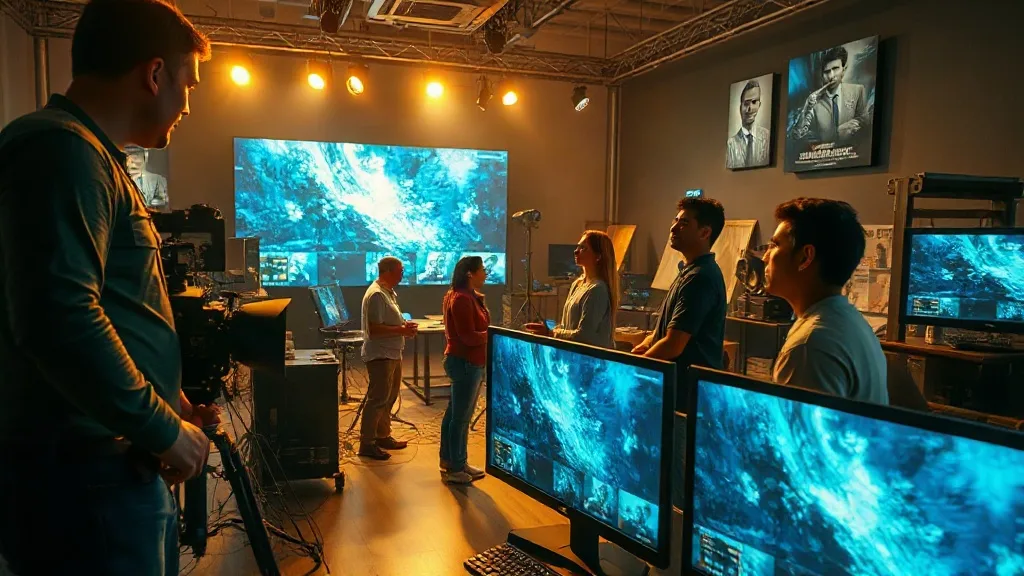
When the credits roll on a spectacle like Baahubali or RRR, the names that flash by are often a blur. But behind those frames lies an intricate pipeline of technology and artistry, shaped by people like C.V. Rao. As the chief technology officer at Annapurna Studios in Hyderabad, Rao has been a quiet force in constructing the digital backbone for some of India’s most ambitious films. Now, his contributions have earned him a Fellowship from the Society of Motion Picture and Television Engineers (SMPTE), making him the first technologist from South India to receive the honor. In a conversation about the recognition, Rao also shared a pointed observation: Indian filmmakers should not rely so heavily on overseas facilities for post-production.
A Fellowship That Highlights a Shift
SMPTE Fellowships are not handed out lightly. The organization, founded in 1916, is the global standard-bearer for motion imaging technology. Being named a Fellow means you have not only excelled in the field but have also contributed to its advancement. For Rao, the recognition is a personal milestone, but it also signals a broader shift: Indian technical expertise is now being acknowledged on the world stage. “It’s a validation of the work we’ve been doing at Annapurna and in the Indian film industry,” Rao says. “But more importantly, it’s a reminder that we have the talent and the infrastructure to compete globally.”
The Tech Behind the Spectacle
Rao’s imprint is most visible in the Baahubali duology and RRR, both directed by S.S. Rajamouli. These films pushed the boundaries of Indian cinema in terms of scale, visual effects, and production design. Rao was instrumental in setting up the workflows that allowed the teams to manage massive amounts of data, coordinate between multiple vendors, and ensure that the visual effects integrated seamlessly with live-action footage. “We had to build a pipeline that could handle the complexity of these films,” he explains. “It wasn’t just about having the latest software; it was about creating a system that could adapt to the creative demands.”
For Baahubali, that meant developing custom tools for pre-visualization and post-production management. For RRR, it involved integrating high-resolution assets from various studios and ensuring color consistency across different formats. These might sound like technical details, but they are the difference between a film that looks polished and one that feels disjointed. Rao’s work behind the scenes is a key reason why these films have been praised for their visual quality.
Why Dependence on Overseas Facilities Is a Concern
Despite the success of Indian films, Rao points out that many productions still send significant portions of their post-production work abroad. This dependence on overseas facilities, he argues, is a double-edged sword. On one hand, it gives filmmakers access to cutting-edge technology and experienced vendors. On the other, it creates a cycle of dependency that can stifle the growth of local infrastructure. “We have some of the best artists and technicians in India,” Rao says. “But if we keep sending work outside, we’re not giving our own facilities the chance to scale up and innovate.”
He also highlights the economic impact. Post-production is a significant cost center, and spending it overseas means that money leaves the Indian ecosystem. “Every time we outsource, we’re investing in someone else’s economy,” he notes. “We need to think about building our own capabilities.” This is not to say that international collaboration is bad; Rao himself has worked with global teams. But he believes the balance needs to shift. “We should be partners, not just clients,” he adds.
Building Self-Reliance: Challenges and Opportunities
The call for self-reliance is easier said than done. India’s post-production industry faces several hurdles: a shortage of skilled labor in specialized areas like advanced compositing and color grading, the high cost of importing equipment, and a lack of consistent training programs. Rao acknowledges these challenges but sees them as opportunities. “We need to invest in training and education,” he says. “We have the talent, but we need to nurture it.”
Annapurna Studios has been doing its part by hosting workshops and collaborating with educational institutions. But Rao believes a more concerted effort is needed, involving both the private sector and the government. “Policy support can make a big difference,” he suggests. “Incentives for post-production houses, easier import of technology, and partnerships with global leaders can help us build a robust ecosystem.”
There is also a cultural shift required. Filmmakers need to trust local facilities with their most ambitious projects. “It’s a chicken-and-egg problem,” Rao admits. “Facilities need big projects to grow, but filmmakers want facilities that have already proven themselves.” He suggests that starting with smaller, manageable portions of work can help build trust. “Once they see the quality, they’ll come back.”
What This Means for the Future of Indian Cinema
Rao’s Fellowship is a moment of pride, but it also serves as a call to action. As Indian cinema continues to expand globally, the need for a strong domestic post-production industry becomes more pressing. Self-reliance doesn’t mean isolation; it means having the capability to choose. “We should be in a position where we can decide what to do in-house and what to outsource based on creative and strategic reasons, not just because we lack options,” Rao says.
The recognition from SMPTE also puts a spotlight on the role of technology in filmmaking. “Technology is not just a tool; it’s an enabler of storytelling,” Rao reflects. “The better our tools, the more freely our creators can imagine.” That philosophy has guided his career, and it’s likely to guide the next generation of Indian technologists.
Frequently Asked Questions
What is the significance of C.V. Rao becoming an SMPTE Fellow?
SMPTE Fellows are recognized for their contributions to motion imaging technology. Rao’s Fellowship highlights the growing influence of Indian technical expertise in global cinema and brings attention to the post-production capabilities available in India.
Why does Rao advise against depending on overseas post-production facilities?
Rao argues that excessive dependence on foreign facilities can hinder the growth of local infrastructure and lead to economic leakage. He believes India has the talent and potential to build self-reliant post-production ecosystems that can compete globally.
What challenges does the Indian post-production industry face?
Key challenges include a shortage of specialized skills, high costs of equipment, and a lack of training programs. Additionally, there is a perception that local facilities may not match international standards, which can deter filmmakers from using them.
How can Indian filmmakers balance global collaboration with local development?
Rao suggests that filmmakers can start by entrusting smaller portions of work to local facilities to build trust. He also advocates for investment in training and policy support to strengthen the domestic industry, enabling a more balanced partnership with global vendors.