
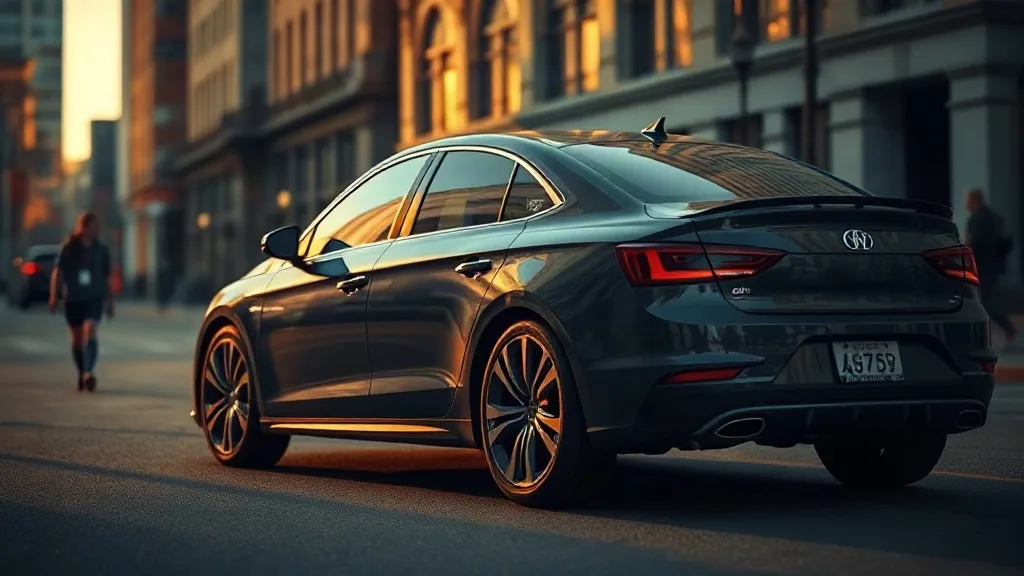
For years the automotive industry has treated the sedan like a relic, something to be quietly retired while every brand raced toward crossovers and SUVs. Hyundai, however, is taking a different stance. The company is making it clear that it does not intend to abandon the traditional four-door car, and the reasoning behind that decision says a lot about where the car market is heading next.
The core argument is straightforward. As vehicle prices climb and household budgets tighten, a growing number of buyers are reconsidering what they actually need from a car. A sedan, which typically costs less to buy, insure and fuel than a comparable SUV, starts to look far more sensible when the monthly payment becomes the deciding factor. Hyundai appears to be betting that this shift is not a short-term blip but a durable change in buyer behavior.
The affordability squeeze is reshaping buyer priorities
Anyone who has shopped for a new car recently knows the sticker shock well. Average transaction prices have settled at levels that would have seemed unrealistic a decade ago, and financing costs have made those numbers even harder to swallow. When interest rates rise, the difference between a moderately equipped sedan and a similarly equipped crossover becomes far more than a rounding error over the life of a loan.
That math changes behavior. Families who once defaulted to the biggest vehicle they could finance are now asking sharper questions. Do we need the extra cargo room every day, or a few weekends a year? Is all-wheel drive essential, or just reassuring? Once those questions get honest answers, the sedan re-enters the conversation.
Hyundai's position reflects a recognition that affordability is becoming a competitive advantage, not an afterthought. Brands that can offer a genuinely good small car at a realistic price stand to win buyers who feel priced out of the crossover segment entirely.
Why Hyundai is better positioned than most
Not every automaker can pivot back toward sedans convincingly. Many have let their four-door lineups age out, cut development budgets or dropped the segment altogether in markets where SUVs dominate. Hyundai has kept a foot in the door, which gives it options that rivals have largely surrendered.
Its sedan range has historically served as an entry point for first-time buyers and value-focused households, and that role matters more when the entry point to car ownership keeps moving upward. Keeping a credible sedan in the showroom gives dealers something to offer customers who walk in with a firm budget and walk out if the numbers do not work.
There is also a strategic dimension. Sedans tend to be more efficient to engineer and build on shared platforms, and they often deliver better aerodynamics and fuel economy than boxier vehicles. In an era when efficiency regulations and running costs both matter, that is not a trivial advantage. Hyundai can lean on lower running costs and simpler packaging as concrete selling points rather than vague promises.
The technology trickle-down effect
One of the quieter arguments for keeping sedans alive is that they give automakers a place to deploy newer, more efficient powertrains in a package buyers can actually afford. Electrified drivetrains and modern safety systems are expensive to develop, and spreading that cost across high-volume, lower-priced models helps bring the technology within reach of more households.
For buyers, that means the sedan segment is no longer the place where you settle for less. It is increasingly where you find sensible engineering without paying a premium for size you may not need.
What this means for shoppers right now
For anyone in the market for a car, Hyundai's commitment is a useful signal. It suggests that the small car segment will not be left to wither, and that competition in that space should remain healthy. Here is how to think about it practically:
- Compare total cost, not just sticker price. Insurance, fuel, tires and financing all tend to favor lighter, smaller vehicles.
- Be honest about space needs. If the extra cargo capacity of an SUV goes unused most weeks, a sedan may deliver better value.
- Watch for feature parity. Modern sedans increasingly carry the same safety and connectivity tech as their taller siblings.
- Factor in resale. Demand for affordable used cars remains strong, which can support sedan residuals.
None of this means crossovers are going away. They remain the default choice for many households, and for good reason. But the assumption that every buyer wants, or can afford, to move up in size is being tested, and Hyundai is positioning itself to benefit if that assumption weakens.
The bigger picture: a segment that refuses to disappear
Predictions of the sedan's demise have been premature before. The segment has shrunk, certainly, and some nameplates have vanished for good. But the underlying reasons people bought sedans in the first place, namely efficiency, value and ease of driving, have not gone anywhere. If anything, they have become more relevant as the cost of owning a car has risen across the board.
Hyundai's stance is less a nostalgic defense of an old format and more a pragmatic read of the market. When money gets tight, buyers get practical. A brand that keeps a well-priced, well-equipped sedan on the lot is offering something increasingly rare: a straightforward path into a new car without stretching a budget to its breaking point.
Whether that bet pays off will depend on execution, pricing and how quickly rivals follow. But for now, the message is clear. The sedan is not being written off, and buyers who thought their options were shrinking may find there is still a sensible choice waiting for them.
Frequently asked questions
Why would Hyundai keep making sedans when SUVs sell so well?
Because not every buyer wants or can afford an SUV. As prices and financing costs rise, sedans offer a lower entry point with better fuel economy and lower running costs. Keeping them in the lineup lets Hyundai serve budget-conscious shoppers who might otherwise leave the brand.
Are sedans actually cheaper to own than crossovers?
Often, yes. Sedans tend to weigh less, which usually means better fuel economy, less expensive tires and sometimes lower insurance costs. The purchase price is typically lower too, which matters more when interest rates are high. Exact savings vary by model and driving habits.
Does this mean Hyundai is scaling back its SUV plans?
Not necessarily. The two strategies can coexist. Crossovers remain a major part of the market and most automakers will keep investing there. Hyundai's point is that sedans deserve a place alongside them rather than being abandoned entirely.
What should I check before choosing a sedan over an SUV?
Look at your real weekly needs: passengers, cargo, parking space and climate. Then compare total ownership costs, including insurance and fuel, rather than just the sticker price. If you rarely use the extra space an SUV offers, a sedan is often the smarter financial choice.