
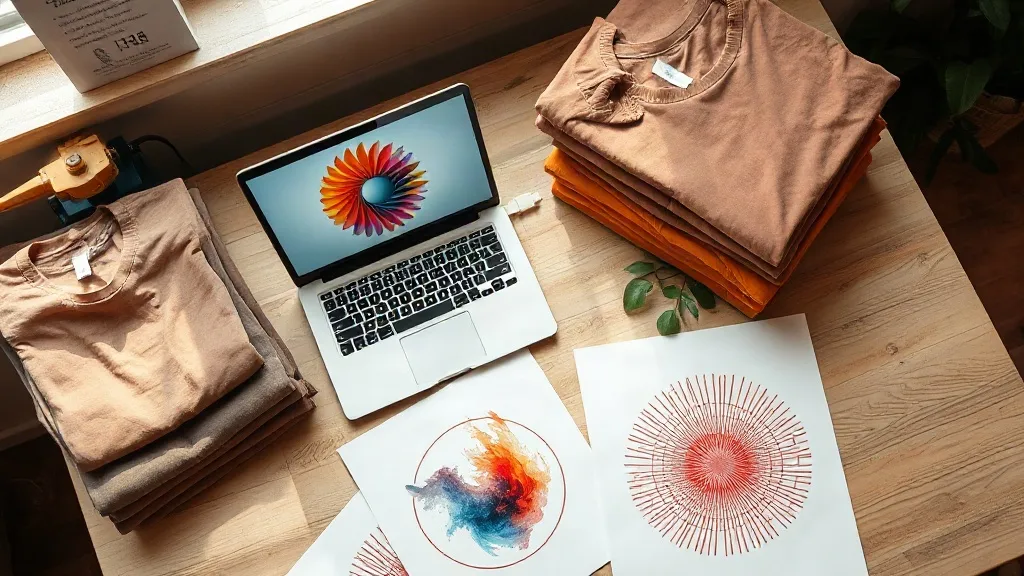
You have a handful of designs, a decent Instagram page, and a growing list of people who want your stuff. What you don't have is a warehouse, a five-figure printing budget, or the patience to sit on 500 shirts that might not sell. That's exactly where dtf transfers change the math for small apparel brands. They let you print detailed, full-color artwork onto garments one order at a time, with no screens, no minimums, and no plates. The result is a production model that fits how small brands actually grow: test, learn, repeat.
This guide is about using that flexibility to build a look people recognize. Not just printing shirts, but making prints that carry your brand's personality across every drop.
Why DTF Fits the Way Small Brands Actually Work
Traditional screen printing rewards volume. The setup cost per color is real, and it only makes sense when you're running dozens or hundreds of the same design. For a brand doing limited drops, that math rarely works. You end up either over-ordering or paying a per-unit price that eats your margin.
dtf flips that. A digital file goes to a printer, gets printed onto film with water-based adhesive powder, and is then heat-pressed onto the garment. There are no screens to burn and no color separations. One-offs are normal. Reorders are normal. Changing a design between drops costs you nothing extra.
That matters because small brands don't grow in straight lines. You release a design, see what lands, and double down on the winners. DTF lets you do that without financial risk.
What You Can Print That Screen Printing Struggles With
Photographic gradients, fine linework, tiny text, watercolor effects, and multi-color illustrations all translate cleanly to DTF. If your brand leans on detailed graphics or soft color blends, this process handles them without the cost explosion you'd see with spot-color screen printing.
The Real Advantage: Design Freedom Without Inventory Risk
Most small brands don't fail because their designs are bad. They fail because they tie up cash in inventory that doesn't move. A 100-piece run of a design that flops is a hard lesson. A five-piece test run is just research.
With DTF, you can print a small batch of a new design, see how it performs, and reorder quickly if it sells. You're not guessing at demand; you're responding to it. That changes how you approach design too. You can take bigger creative swings because the downside is small.
This is also where dtf transfers near me searches start to make sense. Local suppliers who can turn around small orders fast become a real production partner, not just a vendor. If you're in a city with a print shop that offers DTF, you can often get same-week turnaround on short runs, which is a huge advantage for pop-ups, markets, and collabs.
Building a Recognizable Look With DTF
Consistency is what makes a brand look like a brand. Random designs on random blanks read as a hobby. A cohesive visual language reads as a label. DTF gives you the tools to build that language without being locked into one printer's color limitations.
Pick a Palette and Stick to It
Choose three to five core colors that show up across your prints. They don't have to be the only colors you use, but they should be the ones people associate with you. DTF reproduces color accurately, so the red on your hoodie matches the red on your tee matches the red on your tote.
Decide on a Print Size and Placement System
Brands that look polished tend to use consistent placement. A left-chest hit at a fixed size. A centered back print at a fixed width. A sleeve mark that always sits in the same spot. When customers see your product in the wild, that consistency is what makes it instantly recognizable.
Use the Same Blanks Across Drops
Your print is only half the product. The garment underneath matters just as much. Sticking with a consistent blank, whether it's a heavy tee, a ringspun crew, or a hoodie, keeps your fit and feel predictable. It also makes reorders simpler and keeps your sizing chart honest.
A Simple Workflow for Small-Batch DTF Production
You don't need a complicated setup. A basic workflow looks like this:
- Prepare your artwork at 300 DPI with transparent backgrounds.
- Group multiple designs onto a single gangsheet to lower per-unit cost.
- Send the file to your DTF supplier or print it in-house if you have a printer.
- Press the transfers onto pre-shrunk blanks using a heat press with consistent temperature and pressure.
- Do a wash test on one piece before releasing the batch.
The wash test step is the one most small brands skip, and it's the one that catches problems early. A single test wash tells you whether your press settings are right before you ship to customers.
Common Mistakes That Undermine Print Quality
Most DTF problems trace back to a handful of causes. Inconsistent pressure on the heat press, pressing at the wrong temperature, or peeling the film too early or too late. Each of these affects how the adhesive bonds to the fabric, and each one is fixable with a small adjustment.
Another common issue is artwork that's too low-resolution. DTF is forgiving, but it's not magic. If your file is 72 DPI and sized up, the print will look soft. Always start with a clean, high-resolution file.
Finally, fabric choice matters. Cotton and cotton blends take DTF well. Some synthetics and heavily textured fabrics need a lower press temperature or a longer dwell time. Testing on the actual blank you plan to sell is the only reliable way to know.
When Local Sourcing Beats Going Direct
Working with a local DTF supplier has real advantages for small brands. Faster turnaround, easier communication, and the ability to walk in with a garment and see how a print looks before committing to a run. For brands doing market stalls, pop-ups, or local collabs, that speed matters.
Searching for dtf transfers near me is a practical first step if you want to build a relationship with a printer who understands your timeline. Many local shops now offer gangsheet building services, which means you can send a file and get a pressed-and-ready product back without owning any equipment.
FAQ
How many DTF transfers should I order for a first drop?
Start with a small test batch, usually five to ten pieces per design. That's enough to gauge interest without tying up cash. If a design sells through quickly, reorder in larger quantities.
Can I mix DTF with other decoration methods in one product line?
Yes. Many small brands use DTF for detailed or multi-color designs and screen printing for simple one-color logos at higher volume. The two methods can coexist in the same collection as long as the visual style stays consistent.
Do DTF prints hold up after repeated washing?
When applied correctly, DTF prints are durable and resist cracking and fading. Wash inside out in cold water and avoid high heat in the dryer. A proper press setting on the front end is the biggest factor in long-term durability.
Is DTF a good fit for tote bags and accessories?
It can be, but fabric type matters. Cotton canvas totes take DTF well. Nylon and coated materials may not bond properly. Always test on the exact material you plan to sell.
How do I keep my prints looking consistent across different suppliers?
Standardize your artwork files and press settings, and use the same blank across orders. If you switch suppliers, request a sample print first and compare it to your existing stock before committing to a larger run.