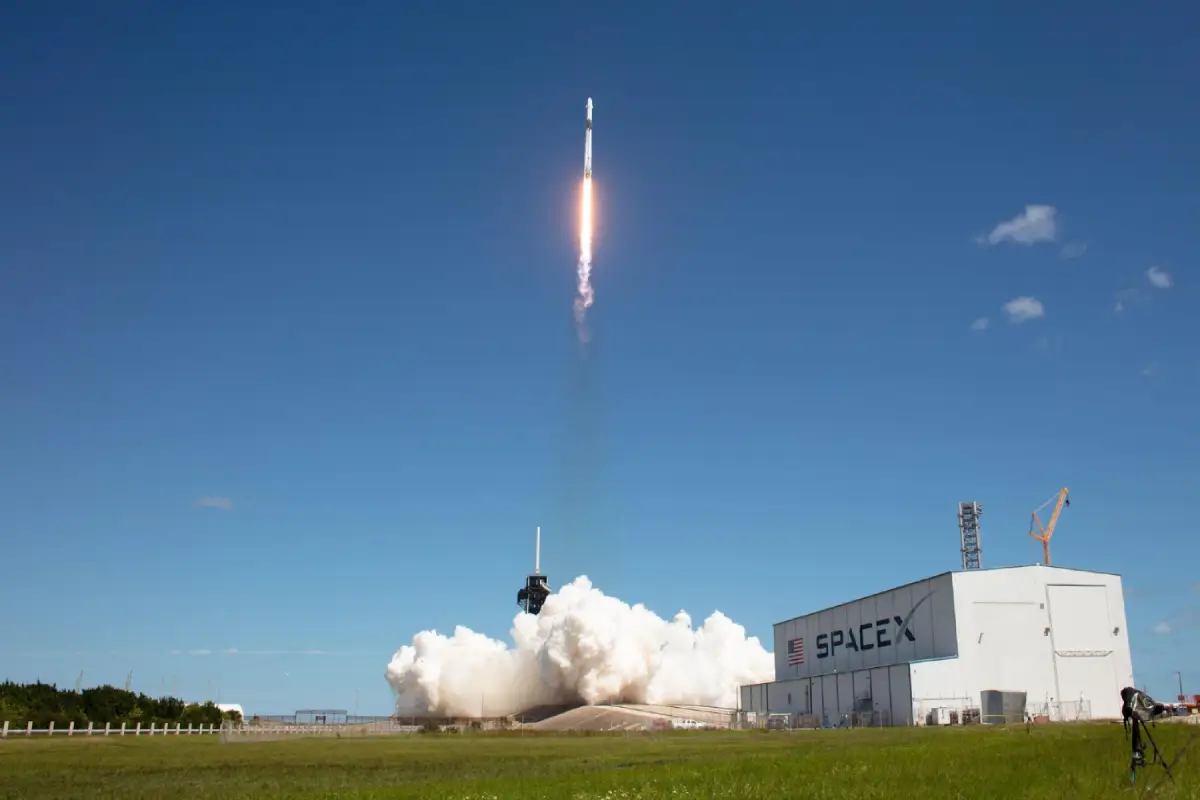
The global financial landscape witnessed an unprecedented milestone when Elon Musk's aerospace giant made its historic debut on the Nasdaq exchange. Breaking all historical records for capital injection, the monumentally anticipated
SpaceX IPO completely reshaped investor expectations surrounding the commercial space economy. For years, institutional analysts and retail traders debated whether the enterprise would spin off its highly profitable satellite internet constellation, Starlink, or list the conglomerate as a single entity. By opting to go public as a unified operation under the ticker symbol SPCX, the organization brought both its bleeding-edge orbital launch infrastructure and its global telecommunications network directly to the public markets simultaneously.
Now that the initial market euphoria has settled into regular trading dynamics, market participants are left with a landscape completely altered by massive capital allocations and incoming liquidity adjustments. Investing in a business that builds reusable heavy-lift rockets, deploys thousands of operational low-Earth orbit satellites, and aims for interplanetary exploration presents a distinct set of risks and rewards. Navigating this new financial era requires evaluating the underlying asset metrics, examining the industrial ripple effects, and remaining highly vigilant about upcoming trading milestones that could dictate the equity's short-term valuation trajectory.
The Mechanics of a Historic Financial Debut
The scale of the transaction orchestrated by the company’s underwriting syndicate established entirely new benchmarks for Wall Street. By raising a staggering seventy-five billion dollars on the sale of over five hundred million shares, the offering successfully bypassed previous record-holders to become the largest initial public offering in global history. Priced initially at one hundred and thirty-five dollars per share, the stock experienced an aggressive initial surge from eager institutional buy-in and intense retail momentum, briefly pushing the parent company's valuation past the two and a half trillion dollar mark.
This immense valuation was driven primarily by a structural strategy that caught much of the financial community by surprise. Instead of carving out the stable, recurring subscription revenue of Starlink to appease risk-averse public market investors, the entire corporate ecosystem was packaged together. This decision means that every share of SPCX directly funds the highly speculative, capital-intensive development of Starship and long-term Mars exploration initiatives using the reliable, multi-billion dollar cash flows generated by orbital connectivity. This architectural bundling guarantees that public shareholders are not merely investing in a telecom utility, but are explicitly funding a deep-tech infrastructure play.
Post-Listing Adjustments and Market Realities
As the primary wave of excitement began to cool, the stock encountered standard post-listing corrections that reflect the complex realities of mega-cap corporate valuations. Within weeks of its explosive debut, the share price dipped slightly below its initial offering price, trading down to around one hundred and thirty-four dollars. This cooling period represents a standard stabilization phase often seen in massive public listings, where early speculative buyers exit their positions and long-term index funds begin balancing their portfolios.
Short-selling activity and corporate debt expansions have also contributed to the equity's volatile baseline. The company's subsequent decision to issue billions of dollars in secondary corporate bonds to accelerate manufacturing operations created temporary downward pressure on equity values, presenting a classic buying opportunity for deep-value investors while shaking out short-term momentum traders. Understanding these macroeconomic shifts allows market observers to separate temporary market noise from the long-term operational health of the enterprise.
Critical Factors Influencing Current Share Volatility
To accurately gauge where the equity goes next, investors must look beyond simple chart patterns and focus on major upcoming structural events. The coming months present highly specific financial hurdles that will test the market's capacity to absorb shares and evaluate true corporate performance.
The Looming Lockup Expiration Shockwave
The most immediate hurdle facing the equity is the massive volume of restricted shares held by early corporate insiders and employees. Historically, large-cap listings experience a modest supply shock when restricted trading windows close, but the scale here is completely unprecedented. An estimated one hundred and twenty-three billion dollars worth of insider shares are legally scheduled to unlock immediately following the release of the company’s debut quarterly earnings report. This massive volume represents a potential selling pressure that is roughly sixty-eight times larger than the standard lockup expiration seen in typical large-cap technology debuts. Whether institutional buyers step in to absorb this localized supply will heavily dictate price stability.
The Multi-Tranche Supply Structure
The internal mechanics of the listing outline two distinct lockup tranches that investors must monitor closely. The first tranche, consisting of over nine hundred million shares held by early venture capital firms and foundational employees, is entirely unconditional and will hit the market regardless of prevailing share prices. The second tranche, valued at approximately sixty-two billion dollars, is strictly conditional upon the stock reclaiming and holding specific high-water marks, such as one hundred and seventy-five dollars and fifty cents per share. This dual-layered structure creates natural resistance zones that active traders are utilizing to frame their options strategies and risk management parameters.
Industrial Disruptions Across Telecommunications and Defense
The massive influx of seventy-five billion dollars in public capital has effectively handed the organization a war chest to completely dominate global communications infrastructure. Traditional terrestrial telecom conglomerates and legacy satellite operators are facing an existential challenge as the capital expenditure advantages of mass-produced, low-Earth orbit hardware become undeniable.
- Legacy Telecom Displacement: Rural broadband infrastructure programs and regional fiber providers are losing market share to satellite connectivity arrays that feature deployment costs under one thousand dollars per customer.
- Defense Sector Dominance: The expansion of secure, military-grade communication variants like Starshield has firmly positioned the firm as a primary defense contractor for national security space architectures.
- Spectrum Acquisition Consolidation: Backed by liquid public equity, the enterprise is actively bidding for terrestrial low-band positioning spectrum to launch direct-to-cell capabilities globally.
- Launch Cost Deflation: The continuing commercialization of fully reusable heavy rocket variants drives down the cost per kilogram to orbit, starving traditional non-reusable launch providers of commercial contracts.
Evaluating Long-Term Corporate Fundamentals
Analyzing a stock born from a historic
SpaceX IPO requires moving away from traditional valuation multiples like price-to-earnings ratios. Because a massive portion of revenue is immediately reinvested into unproven, multi-decade infrastructure projects like interplanetary transport, traditional models fail to capture the true asset value. Instead, sophisticated analysts look to the recurring high-margin subscription metrics of the connectivity business to establish a fundamental floor for the corporate valuation.
With more than ten million global subscribers across over one hundred and sixty countries, the satellite internet unit acts as the financial engine driving the entire enterprise. Generating billions in stable recurring cash flows, it effectively de-risks the capital-intensive exploration and launch divisions. As long as this digital ecosystem continues its exponential growth, the company can sustain its aggressive research and development timelines without needing to dilute public shareholders with constant secondary equity offerings.
Frequently Asked Questions
Why did the company choose to list the entire conglomerate instead of spinning off Starlink?
Listing the entire corporation allowed the organization to achieve a massive valuation and secure a seventy-five billion dollar capital injection in one move. More importantly, keeping the high-margin, recurring revenue of the satellite internet network bundled inside the parent company ensures that those steady cash flows can directly fund the capital-intensive development of Starship without ceding control to separate outside shareholders.
What does the historic IPO mean for retail investors wanting to buy shares now?
The public listing means that anyone with a standard brokerage account can now purchase shares directly under the ticker SPCX. However, retail buyers should remain highly conscious of post-IPO structural milestones, such as the upcoming insider lockup expirations, which can create significant short-term price drops and buying opportunities.
How will the massive lockup expiration in August impact the stock price?
The lockup expiration scheduled for early August will unlock approximately one hundred and twenty-three billion dollars worth of previously restricted shares held by early investors and employees. This introduces a massive potential supply to the market, which can create short-term downward price pressure if institutional demand does not immediately rise to absorb the selling volume.
Can the company still spin off Starlink as a separate stock in the future?
Yes, a future spin-off remains structurally possible. Corporate leadership has previously noted that the satellite connectivity division could eventually be carved out into a standalone public entity once its long-term cash flows become completely predictable and independent from the broader engineering demands of the launch division.
Participating in the public era of commercial aerospace requires a long-term vision and a calculated approach to short-term market volatility. The capital raised from this record-breaking market entry provides the structural foundation required to transition humanity into a true multi-planetary species. Here at Major Daily, we are dedicated to dissecting the complex corporate moves and technical milestones that shape our economic future. Monitor the upcoming earnings reports closely, keep a sharp eye on the insider trading windows, and leverage this transformative era of industrial engineering to build a highly resilient, future-proof investment portfolio.