
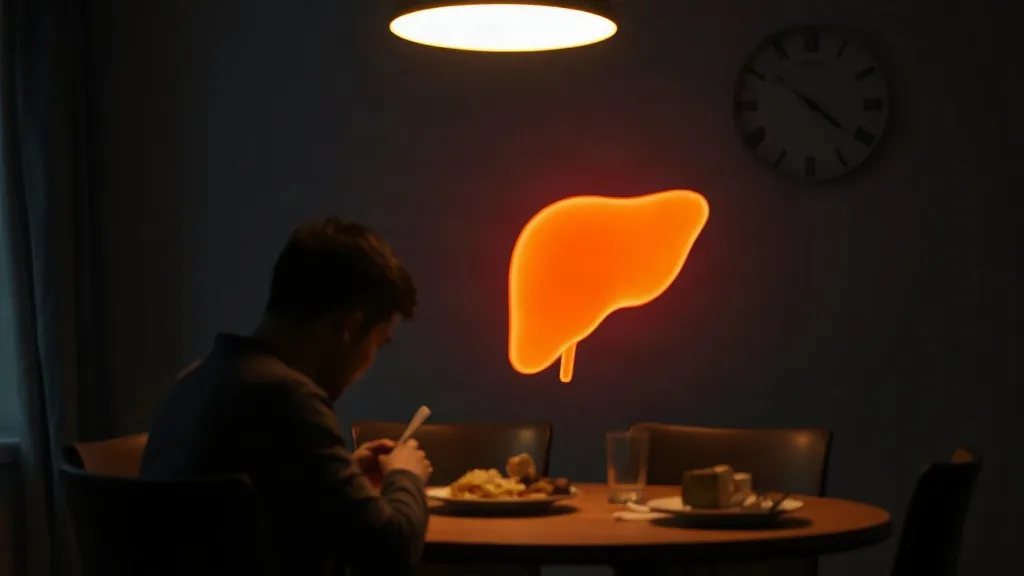
If you often find yourself rummaging through the fridge long after dinner, you might be doing more than satisfying a midnight craving. A large new study suggests that regularly eating late at night could significantly increase your risk of developing liver disease, including fatty liver disease and cirrhosis.
The research, led by Oregon Health & Science University, analyzed data from nearly 200,000 people and found that those who habitually ate after dinner or close to bedtime had a 20% to 30% higher risk of liver disease compared to those who didn't. The findings add to a growing body of evidence that when you eat may be just as important as what you eat when it comes to metabolic health.
What the Study Found
The study drew on health and lifestyle data from a vast cohort, tracking participants' eating habits and liver health over time. Researchers identified a clear pattern: people who reported eating late in the evening or within a couple of hours of going to sleep were more likely to develop liver conditions. The risk wasn't trivial. It climbed by 20% to 30%, a range that researchers say is clinically meaningful.
While the study doesn't prove that late-night eating directly causes liver disease, its size and consistency strengthen the case that meal timing plays a role. The association held even after accounting for factors like overall diet quality, alcohol consumption, and body weight, suggesting that the timing itself may matter independently.
Why Your Liver Cares About the Clock
Your liver is a metabolic multitasker. It processes nutrients, filters toxins, and regulates blood sugar and fat. Like most organs, it follows a circadian rhythm, a 24-hour internal clock that dictates when it's primed for certain tasks. During the day, the liver is geared up to handle incoming food, storing energy and breaking down fats. At night, it shifts into a repair and maintenance mode.
When you eat late, you disrupt this natural rhythm. The liver is forced to process a fresh load of nutrients when it should be resting. Over time, this mismatch can lead to fat accumulation in liver cells, inflammation, and eventually fibrosis, the scarring that characterizes cirrhosis. Circadian misalignment is the scientific term for this phenomenon, and it's been linked to a range of metabolic problems, from obesity to type 2 diabetes.
What's more, late-night meals tend to be higher in calories, sugar, and unhealthy fats. Pizza, ice cream, and chips are common culprits. But even if you choose a relatively healthy snack, the timing alone may still pose a risk, according to the study's findings.
The Role of Insulin and Fat Storage
Insulin sensitivity follows a daily pattern too. In the evening, your body becomes less responsive to insulin, meaning it takes more of the hormone to clear sugar from your blood. If you eat a carbohydrate-heavy meal late at night, your blood sugar may stay elevated longer, prompting the liver to convert excess sugar into fat. This fat can accumulate in liver cells, leading to non-alcoholic fatty liver disease (NAFLD), the most common chronic liver condition worldwide.
NAFLD often has no symptoms in its early stages, which is why it's sometimes called a silent disease. But it can progress to more serious conditions, including steatohepatitis (NASH), cirrhosis, and even liver cancer. The new study suggests that late-night eating could be one of the modifiable behaviors that push people toward this trajectory.
Who Is Most at Risk?
The study didn't single out a particular demographic, but previous research indicates that certain groups may be more vulnerable to the effects of late eating. Shift workers, for example, often have no choice but to eat during odd hours. Their disrupted sleep-wake cycles already put them at higher risk for metabolic disorders, and late meals may compound the problem.
People with existing risk factors for liver disease, such as obesity, type 2 diabetes, or high cholesterol, should be especially mindful. For them, a late-night snack could be the extra push that tips the liver from healthy to diseased. Even those without obvious risk factors aren't off the hook. The study included a broad population, and the association held across various subgroups.
It's Not Just About Willpower
It's easy to blame late-night eating on a lack of discipline, but biology plays a big role. The hormone ghrelin, which stimulates hunger, tends to rise in the evening, while leptin, which signals fullness, decreases. This combination can make you feel hungrier at night, even if you ate a satisfying dinner. Add in fatigue, stress, and the ubiquity of late-night food delivery apps, and it's no wonder so many people struggle.
Understanding these biological drivers can help you approach the issue with self-compassion rather than guilt. The goal isn't to never eat after 8 p.m. again. It's to recognize the patterns and make gradual adjustments that work for your life.
Practical Steps to Protect Your Liver
If you're concerned about your liver health, you don't need to overhaul your entire routine overnight. Small, consistent changes can make a difference. Here are some strategies to consider:
- Set a kitchen curfew. Aim to finish eating at least three hours before bedtime. This gives your body time to digest and allows your liver to shift into its nighttime repair mode.
- Front-load your calories. Try to make breakfast and lunch your larger meals. A heavier lunch and a lighter dinner can help you feel satisfied without late-night hunger.
- Plan for cravings. If you know you get hungry at night, keep healthy options like Greek yogurt, a small handful of nuts, or a piece of fruit on hand. If you do eat late, keep it light and low in sugar.
- Stay hydrated. Sometimes thirst masquerades as hunger. Drink a glass of water before reaching for a snack.
- Improve sleep hygiene. A consistent sleep schedule and a relaxing bedtime routine can reduce evening hunger and make it easier to skip the late-night fridge raid.
These steps aren't just about liver health. They can also improve sleep quality, help with weight management, and stabilize blood sugar levels. Think of them as a holistic upgrade to your daily rhythm.
What This Means for Public Health
The study's findings have implications beyond individual choices. In a 24/7 society, late-night eating is often normalized. Restaurants, delivery services, and grocery stores cater to nocturnal cravings. But if the research continues to confirm a link between late eating and liver disease, public health guidelines may need to catch up.
Some experts are already calling for more emphasis on meal timing in dietary recommendations. While the classic advice to eat a balanced diet and exercise remains important, adding a note about when to eat could amplify the benefits. For doctors, asking patients about their eating schedules might become as routine as asking about smoking or alcohol use.
Of course, more research is needed to pin down the exact mechanisms and to see whether shifting meal times can reverse or prevent liver damage. But the current evidence is compelling enough to warrant attention.
Frequently Asked Questions
Is it okay to eat a small snack before bed?
If you're truly hungry, a small, balanced snack that combines protein and fiber, like an apple with peanut butter, is unlikely to cause harm. The key is to avoid large, high-calorie meals close to bedtime. The study focused on regular late-night eating patterns, not an occasional light snack.
Does this mean I should never eat after 8 p.m.?
Not necessarily. The study found an association, not a hard rule. The risk was highest for those who routinely ate after dinner or near bedtime. If you occasionally have a late meal, your liver is resilient. The concern is chronic late eating that becomes a habit.
Can I reverse liver damage from late-night eating?
In its early stages, fatty liver disease can be reversed through lifestyle changes, including weight loss, improved diet, and better meal timing. However, once cirrhosis develops, the damage is typically permanent. That's why prevention and early intervention are so important.
What if I work night shifts and have no choice but to eat late?
Shift work is challenging, but you can mitigate some risks. Try to eat your main meal before your shift, and keep snacks light and nutritious. Avoid heavy, sugary foods during the night. Also, prioritize sleep and regular check-ups to monitor liver health.
How can I tell if my liver is damaged?
Early liver disease often has no symptoms. As it progresses, you might experience fatigue, abdominal pain, swelling, or jaundice (yellowing of the skin and eyes). If you have concerns, talk to your doctor about liver function tests.
The Bottom Line
This study adds a powerful new reason to rethink that midnight snack. While the occasional late meal isn't likely to harm you, making it a regular habit could put your liver at risk. By adjusting your eating schedule and adopting a few practical habits, you can support your liver's natural rhythms and reduce your risk of serious disease.
Your liver works hard for you around the clock. Giving it a break at night might be one of the simplest ways to return the favor.