
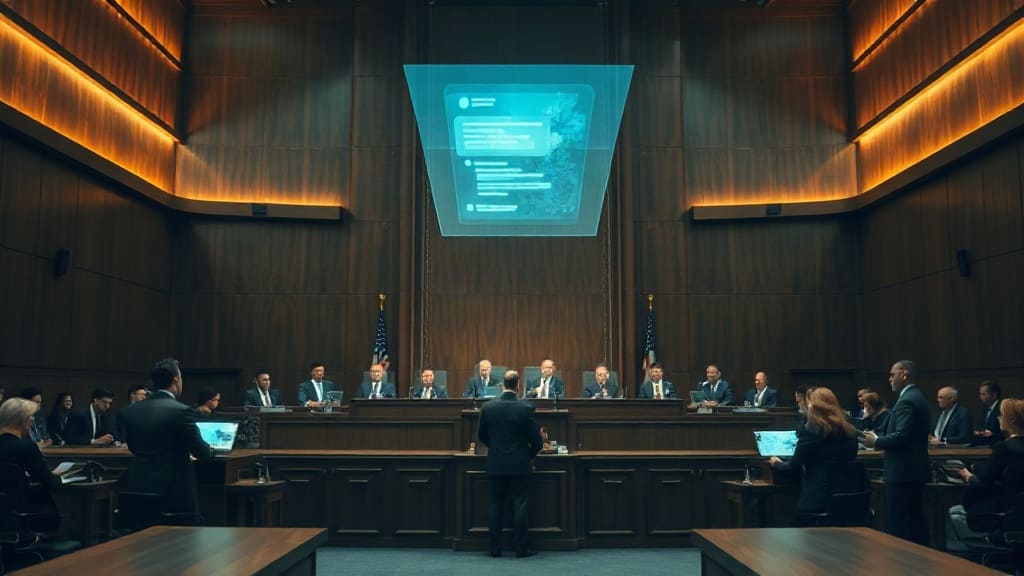
In a dramatic escalation of legal pressure, the law firm Edelson PC has filed 30 additional lawsuits against OpenAI, the company behind ChatGPT, in connection with the Tumbler Ridge shooting. The new filings, which bring the total number of cases to a staggering figure, allege that OpenAI's technology played a role in enabling the tragedy. More significantly, the lawsuits now accuse the company of aiding and abetting and explicitly name Chris Lehane, a prominent figure associated with OpenAI, as a defendant. While the claims are serious, it is important to note that the evidence presented so far remains unconfirmed, and the legal battle is likely to be long and complex.
This development marks a notable shift in the legal strategy of Edelson PC, a firm known for its aggressive pursuit of tech companies in high-stakes litigation. The initial lawsuits, filed earlier, focused primarily on product liability and negligence. The new claims, however, go further by suggesting that OpenAI had knowledge of potential misuse and failed to act, thereby crossing the line from passive negligence to active complicity. The inclusion of Chris Lehane, who has served in various advisory and strategic roles, adds a personal dimension to the case and signals an attempt to hold individuals accountable, not just the corporation.
Understanding the Tumbler Ridge Shooting and Its Aftermath
The Tumbler Ridge shooting was a horrific event that shook a small community and sparked nationwide debates about gun violence, mental health, and the role of technology in society. While the specific details of the shooter's motivations and actions remain under investigation, the families of victims and survivors have sought answers and accountability from multiple fronts. In the wake of the tragedy, attention turned to the shooter's online activity and the tools they may have used. This is where OpenAI entered the picture, as the lawsuits allege that the shooter interacted with ChatGPT or other AI systems in ways that contributed to the planning or execution of the attack.
It is crucial to approach these allegations with caution. As of now, there is no publicly available evidence that definitively proves a causal link between OpenAI's technology and the shooting. The legal system operates on the principle of innocent until proven guilty, and OpenAI has consistently denied any wrongdoing. However, the sheer volume of new lawsuits indicates a coordinated effort by Edelson PC to build a compelling narrative and force OpenAI to confront uncomfortable questions about its responsibilities as a developer of powerful AI tools.
The Evolution of Legal Claims: From Negligence to Aiding and Abetting
The shift from negligence to aiding and abetting is a significant legal maneuver. Negligence typically involves a failure to exercise reasonable care, such as not implementing adequate safeguards. Aiding and abetting, on the other hand, implies a more active role: that OpenAI not only knew about the potential for harm but also provided substantial assistance or encouragement to the perpetrator. This is a much higher bar to clear in court, requiring proof of intent or knowledge of the specific crime.
Legal experts have noted that such claims are uncommon in the tech sector and could set a precedent if they survive motions to dismiss. The inclusion of Chris Lehane, known for his crisis management and political consulting background, is intriguing. It suggests that the plaintiffs believe he had a direct hand in decisions about AI safety protocols or public messaging that may have contributed to the harm. Whether this strategy will succeed remains to be seen, but it certainly raises the stakes for OpenAI and its leadership.
What This Means for the AI Industry
Beyond the immediate legal battle, these lawsuits have broader implications for the entire artificial intelligence industry. As AI systems become more integrated into daily life, questions about liability and accountability are becoming unavoidable. If a court were to hold OpenAI liable for the actions of a user, it could open the floodgates for similar lawsuits against other AI developers, from chatbots to autonomous vehicles. This could stifle innovation or, conversely, force companies to invest more heavily in safety measures and content moderation.
For now, OpenAI has remained relatively quiet on the new filings, issuing only a brief statement denying the allegations and expressing sympathy for the victims. The company has previously argued that it cannot be held responsible for every misuse of its technology, pointing to the millions of benign interactions that occur daily. However, critics argue that the company has not done enough to prevent harmful uses, especially when its models can generate detailed instructions or emotionally manipulative content.
The Road Ahead: Legal and Ethical Battles
As the cases proceed through the courts, several key questions will need to be addressed. First, can the plaintiffs establish a direct link between the shooter's use of ChatGPT and the tragic outcome? Second, does OpenAI's knowledge of potential misuse rise to the level of intent required for aiding and abetting? Third, does naming Chris Lehane as an individual defendant strengthen the case or is it a tactical move to force a settlement?
Legal analysts predict that OpenAI will file motions to dismiss, arguing that the claims are legally insufficient and that the company is protected by Section 230 of the Communications Decency Act, which shields online platforms from liability for user-generated content. However, Edelson PC has already signaled that it will challenge the applicability of Section 230 to AI systems, arguing that generative AI is fundamentally different from traditional platforms. This could become a landmark battle over the future of AI regulation.
Community Response and Public Sentiment
In Tumbler Ridge and beyond, the news of additional lawsuits has been met with mixed emotions. Some see it as a necessary step toward justice and accountability, while others worry that it risks turning a human tragedy into a legal circus. Families of the victims have expressed hope that the lawsuits will force meaningful changes in how AI companies operate, including more robust age verification, content filters, and mental health resources.
Public sentiment toward OpenAI has also shifted in recent months. Once hailed as a pioneer of innovation, the company now faces increasing scrutiny over its data practices, labor conditions, and the societal impact of its products. The Tumbler Ridge lawsuits add another layer to this growing skepticism, and the outcome could influence public trust in AI for years to come.
Potential Outcomes and What to Watch For
Several scenarios could unfold in the coming months. The cases could be consolidated into a multidistrict litigation (MDL) to streamline proceedings, given the similarity of claims. A settlement is always possible, though OpenAI may be reluctant to set a precedent by paying out large sums. If the cases go to trial, they could last for years and involve extensive discovery into OpenAI's internal communications and safety protocols.
For observers, the key developments to watch include any rulings on motions to dismiss, the court's interpretation of Section 230 in the AI context, and whether Chris Lehane's inclusion leads to personal liability. The outcome could reshape the legal landscape for AI and set the tone for future regulation.
Frequently Asked Questions
What is the Tumbler Ridge shooting and why is OpenAI being sued?
The Tumbler Ridge shooting was a tragic event that resulted in multiple casualties. OpenAI is being sued because the plaintiffs allege that the shooter used ChatGPT or similar AI tools in a way that contributed to the attack, and that OpenAI failed to prevent such misuse. The lawsuits claim negligence and, more recently, aiding and abetting.
Who is Chris Lehane and why is he named in the lawsuits?
Chris Lehane is a well-known political strategist and crisis manager who has been associated with OpenAI in an advisory or strategic role. The lawsuits name him as a defendant, alleging that he was involved in decisions related to AI safety or public messaging that may have contributed to the harm. His inclusion is seen as an attempt to hold individuals accountable.
What does 'aiding and abetting' mean in this legal context?
In legal terms, aiding and abetting means that a person or entity knowingly provided substantial assistance or encouragement to someone committing a crime. In this case, the plaintiffs argue that OpenAI not only failed to prevent misuse of its technology but actively facilitated it through its design, policies, or lack of safeguards.
Could these lawsuits set a precedent for AI liability?
Yes, if the courts allow these claims to proceed and potentially rule in favor of the plaintiffs, it could establish that AI developers can be held liable for the actions of their users. This would have far-reaching implications for the tech industry, potentially leading to stricter regulations and increased safety measures.
What is OpenAI's response to the new lawsuits?
OpenAI has denied the allegations and expressed sympathy for the victims of the shooting. The company maintains that it cannot be held responsible for every misuse of its technology and argues that it has implemented safety measures to prevent harmful uses. Legal experts expect OpenAI to file motions to dismiss based on Section 230 protections.