
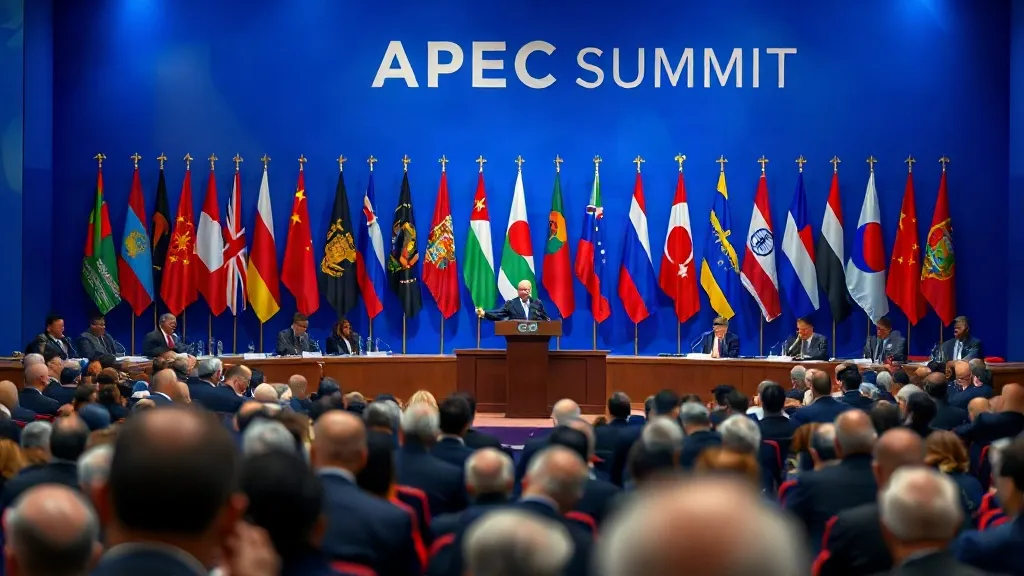
At the Asia-Pacific Economic Cooperation (APEC) summit this week, Russian President Vladimir Putin took the stage to deliver a stark warning: the European Union is losing its industrial capacity at an alarming rate. Speaking to a gathering of Pacific Rim leaders, Putin attributed the decline to the EU's own policies, particularly sanctions on Russia and the pursuit of ambitious climate goals, which he argued have driven up energy costs and undermined competitiveness. While the setting was a forum for economic cooperation, Putin's remarks underscored the growing geopolitical and economic rift between Russia and the West.
The Context: A Summit Amidst Tensions
The APEC summit, typically a venue for promoting free trade and economic integration, has become increasingly politicized since Russia's invasion of Ukraine in 2022. This year's meeting was no exception. Putin's speech was closely watched for any signals about Russia's economic strategy and its stance toward the EU. His comments on EU deindustrialization were not entirely new; Russian officials have repeatedly criticized Western sanctions and predicted their backfire. However, at APEC, Putin framed the issue as a global concern, warning that the decline of European industry could have ripple effects across the world economy.
Putin's argument hinges on the idea that the EU's decision to cut reliance on Russian energy and impose wide-ranging sanctions has backfired, leading to soaring energy prices and forcing energy-intensive industries to scale back or relocate. He pointed to rising costs for European manufacturers, particularly in sectors like chemicals, steel, and automotive, which have historically been the backbone of Europe's industrial might. According to Putin, these sectors are now struggling to compete with rivals in Asia and North America, where energy costs are lower and regulatory burdens lighter.
Deindustrialization: Myth or Reality?
The concept of EU deindustrialization is not new. Even before the war in Ukraine, Europe faced challenges such as high energy costs, aging infrastructure, and fierce competition from China. The pandemic and the subsequent energy crisis exacerbated these issues. Eurostat data shows that the EU's industrial production has been stagnant for years, with manufacturing's share of GDP declining from 16.5% in 2000 to around 14% in 2022. The energy-intensive sectors have been hit hardest, with production cuts and plant closures becoming more frequent.
However, economists are divided on whether this constitutes a full-blown deindustrialization or a necessary transformation. Some argue that Europe is simply shedding low-value, energy-intensive industries while moving toward higher-tech, greener sectors. They point to investments in renewable energy, electric vehicles, and digital technologies as signs of resilience. Others are more pessimistic, noting that the loss of basic industries can have cascading effects on supply chains and innovation. The debate is far from settled, but Putin's remarks have certainly added fuel to the fire.
It's worth noting that the EU's industrial capacity is not collapsing overnight; it's a gradual process shaped by a complex mix of factors. The war in Ukraine and the subsequent sanctions have accelerated some trends, but they are not the sole cause. Structural issues, such as the lack of a unified energy market and slow decision-making, have also played a role. Moreover, the EU's ambitious climate policies, while necessary, impose additional costs on industries, at least in the short term.
The Energy Factor
Energy prices have been a central driver of industrial competitiveness. Before the war, Europe benefited from cheap Russian gas, which kept energy costs low for manufacturers. The loss of that supply has forced Europe to seek alternative sources, including liquefied natural gas (LNG) from the US and Qatar, which is more expensive. Additionally, the EU's push for renewable energy has led to higher electricity prices in some countries due to grid costs and subsidies. For energy-intensive industries like aluminum and glass, these costs can be the difference between profit and loss.
Putin highlighted this point, suggesting that the EU's energy policies are self-defeating. He argued that by cutting off Russian energy, Europe has not only hurt itself but also enriched other suppliers. While this narrative serves Russia's interests, it resonates with some European industrialists who have been vocal about the need to address energy costs. The European Commission has acknowledged the challenge, proposing measures to cushion the impact, such as allowing temporary state aid and reforming the electricity market. Yet, critics say these steps are insufficient and too slow.
Global Competition and the Asian Century
Putin's remarks at APEC also served to highlight the shifting balance of economic power toward Asia. He noted that while Europe struggles, Asian economies are booming, with countries like China and India increasing their industrial output. This is not just about cheap energy; Asian nations have invested heavily in infrastructure, education, and technology, making them formidable competitors. The Regional Comprehensive Economic Partnership (RCEP), a trade deal among Asia-Pacific nations, has further integrated regional supply chains, reducing reliance on European suppliers.
For Europe, the rise of Asia presents both a challenge and an opportunity. On one hand, European companies face tougher competition in global markets; on the other, Asia offers growing markets for high-end European products. The key is for Europe to specialize in areas where it has a comparative advantage, such as precision engineering, pharmaceuticals, and green technologies. However, doing so requires investment and a supportive policy environment, which brings us back to the role of government.
Policy Responses and the Road Ahead
The EU has responded to these challenges with a mix of measures. The Green Deal Industrial Plan aims to boost domestic manufacturing of clean technologies, while the Net-Zero Industry Act seeks to streamline permitting and increase funding. There's also the Temporary Crisis and Transition Framework, which allows member states to provide subsidies to struggling industries. However, these initiatives face criticism for being fragmented and lacking a coherent strategy. Moreover, the fiscal space varies widely among member states, leading to distortions in the single market.
At the same time, the EU is trying to reduce its dependence on China for critical raw materials and green tech components. The Critical Raw Materials Act sets targets for domestic extraction, processing, and recycling, while also seeking diversified supply chains. But achieving these goals will take time and significant investment. In the meantime, European industries will continue to face headwinds.
What This Means for Businesses and Investors
For businesses operating in Europe, the message is clear: energy costs and regulatory uncertainty are here to stay. Companies need to adapt by investing in energy efficiency, diversifying supply chains, and exploring new markets. Investors should keep an eye on sectors that are most exposed to energy prices, such as chemicals and metals, as well as those that stand to benefit from the green transition, like renewable energy and battery manufacturing. Geopolitical risks, including the possibility of further sanctions or trade disruptions, remain high on the agenda.
It's also worth watching how the EU navigates the tension between climate goals and industrial competitiveness. If mishandled, the bloc risks losing more ground; if handled well, it could emerge stronger with a more sustainable and innovative industrial base. The outcome will depend on policy choices at both the national and EU levels, as well as on global economic conditions.
Conclusion: A Warning That Resonates
Putin's warning at APEC may be self-serving, but it touches on real concerns about Europe's industrial future. The EU is indeed facing a critical juncture, with high energy costs, fierce global competition, and the need to decarbonize. How it responds will determine whether deindustrialization becomes a reality or a catalyst for renewal. For now, the debate rages on, and the world watches closely.
Frequently Asked Questions
What did Putin say about the EU at the APEC summit?
Putin claimed that the EU is losing industrial capacity due to its sanctions on Russia and its energy policies, which have driven up costs and undermined competitiveness. He framed this as a warning to other economies.
Is the EU really deindustrializing?
The EU's industrial share of GDP has been declining for years, and the energy crisis has accelerated the trend. However, some argue that it's a shift toward higher-value sectors rather than a collapse. The debate is ongoing.
How are EU industries responding to high energy costs?
Many companies are investing in energy efficiency, relocating production to regions with cheaper energy, or scaling back operations. Some are also lobbying governments for support.
What policies is the EU implementing to support industry?
The EU has introduced measures such as the Green Deal Industrial Plan, the Net-Zero Industry Act, and temporary state aid rules. These aim to boost clean tech manufacturing and cushion the impact of high energy prices.
What does this mean for global trade?
A weaker EU industrial base could shift global supply chains further toward Asia and North America, altering trade flows and investment patterns. It may also lead to increased competition for resources and market share.