
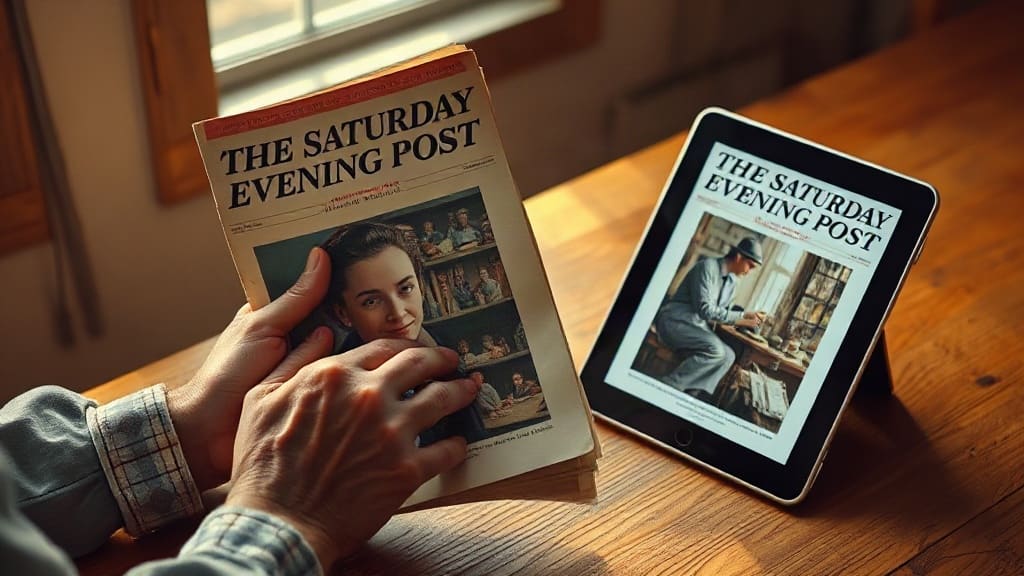
When a magazine that has been in continuous publication since 1821 decides to stop its printing presses, it is more than a business decision. It is a cultural marker. The Saturday Evening Post, with its Norman Rockwell covers and Jack London stories, will no longer appear on newsstands. Instead, it will live entirely online. The shift ends a 205-year tradition of print and raises questions about the future of legacy media in a digital age.
The magazine, once a fixture in American living rooms, is not disappearing. It is transforming. The editors have made it clear that the brand will continue, but the physical object that readers held in their hands for two centuries will become a memory. The move reflects broader trends in publishing, where advertising dollars and reader habits have migrated to screens. For longtime subscribers, the change is bittersweet. For the industry, it is a warning and a lesson.
A Storied History of American Storytelling
The Saturday Evening Post began as a four-page newspaper in Philadelphia. It grew into a weekly magazine that reached millions of homes at its peak. The publication was not just a source of entertainment; it was a mirror of American life. Its covers, often painted by Norman Rockwell, captured everyday moments with warmth and humor. Those images became icons, shaping how Americans saw themselves.
The magazine also published some of the most beloved writers of the 19th and 20th centuries. Jack London, F. Scott Fitzgerald, and Ray Bradbury all appeared in its pages. The Post was known for its serialized fiction, which kept readers coming back week after week. It was a place where literature met popular culture, and where a middle-class family could find stories that spoke to their hopes and fears.
Why the Print Edition Is Ending
The decision to stop printing did not happen overnight. Like many print publications, the Saturday Evening Post has faced declining circulation and advertising revenue for years. The rise of digital media changed how people consume news and entertainment. Younger readers, in particular, are less likely to subscribe to a print magazine when they can access content for free online. Advertisers followed the audience, and the economics of printing and distribution became harder to justify.
The magazine had already reduced its frequency over the years. What was once a weekly publication became a bimonthly one. The shift to digital-only is the logical next step in a long process of adaptation. The editors have emphasized that the move will allow them to invest more in digital content, including multimedia storytelling and interactive features. In theory, this could broaden the magazine's reach beyond its traditional print audience.
The Impact on Readers and Subscribers
For loyal readers, the end of print is a loss. There is a tactile pleasure in turning the pages of a magazine, in seeing the artwork at full size, in clipping a recipe or a cartoon. Digital formats cannot fully replicate that experience. Some subscribers may feel alienated, especially older readers who are not comfortable with screens. The magazine must work hard to retain their trust and loyalty during the transition.
At the same time, the digital edition offers new possibilities. Readers can access archives, watch videos, and engage with content in ways that print never allowed. The magazine can update stories in real time and reach a global audience. The challenge will be to preserve the editorial voice and visual identity that made the Post distinctive. If the digital version feels generic, it will lose its reason for being.
What This Means for the Future of Print Media
The Saturday Evening Post is not alone in abandoning print. Many newspapers and magazines have made similar moves, from Newsweek to The Independent. Each closure or transition raises the same question: is print dead? The answer is more nuanced. Print is not dead, but it is no longer the default medium. It survives in niches, such as luxury magazines, literary journals, and community newspapers. For mass-market publications, the economics are brutal.
The Post's decision may encourage other legacy brands to follow suit. If a magazine with such a long history cannot sustain print, what hope is there for younger titles? Yet the Post's digital future also demonstrates resilience. The brand has value, and the editors believe they can carry that value into a new medium. The key will be execution. A bad digital transition can destroy a publication's reputation; a good one can give it a second life.
Preserving the Legacy in a Digital World
The Saturday Evening Post has an immense archive of covers, articles, and illustrations. That archive is a treasure trove for historians, educators, and fans. The digital transition offers an opportunity to make that archive more accessible than ever. The magazine could create online exhibits, digitize rare issues, and offer interactive experiences that bring its history to life. This would not only preserve the legacy but also introduce it to new generations.
There is also a role for the magazine as a cultural commentator. The Post has always been a reflection of its time. In the digital era, it can continue that role by exploring how technology changes our lives, our communities, and our sense of identity. By staying true to its core values, the magazine can remain relevant even without a print edition. The challenge is to balance tradition with innovation.
Frequently Asked Questions
Why is the Saturday Evening Post stopping its print edition?
The magazine is ending its print edition because of declining circulation and advertising revenue, as well as the shift of readers to digital platforms. The move allows the publication to focus resources on its online presence and reduce printing and distribution costs.
Will the Saturday Evening Post still be available to read?
Yes, the Saturday Evening Post will continue to publish content on its website and digital platforms. Readers can access articles, features, and archives online. The magazine will no longer be available in physical print form.
What will happen to the magazine's archives and classic covers?
The magazine's extensive archives, including famous Norman Rockwell covers, are expected to remain accessible online. The digital format may make it easier for the public to explore historical content, and the magazine may develop new digital exhibits or features highlighting its legacy.
How are long-time subscribers affected by this change?
Long-time subscribers will likely be transitioned to digital subscriptions or offered alternative arrangements. The magazine may provide support to help readers access digital content and may offer refunds or extensions for remaining print subscriptions. Specific details are usually communicated directly to subscribers.
Is this the end of the Saturday Evening Post brand?
No, the brand will continue. The magazine is shifting to a digital-only model, meaning it will still produce editorial content, but it will be distributed online rather than in print. The editors have stated their commitment to maintaining the magazine's voice and legacy in the digital space.