
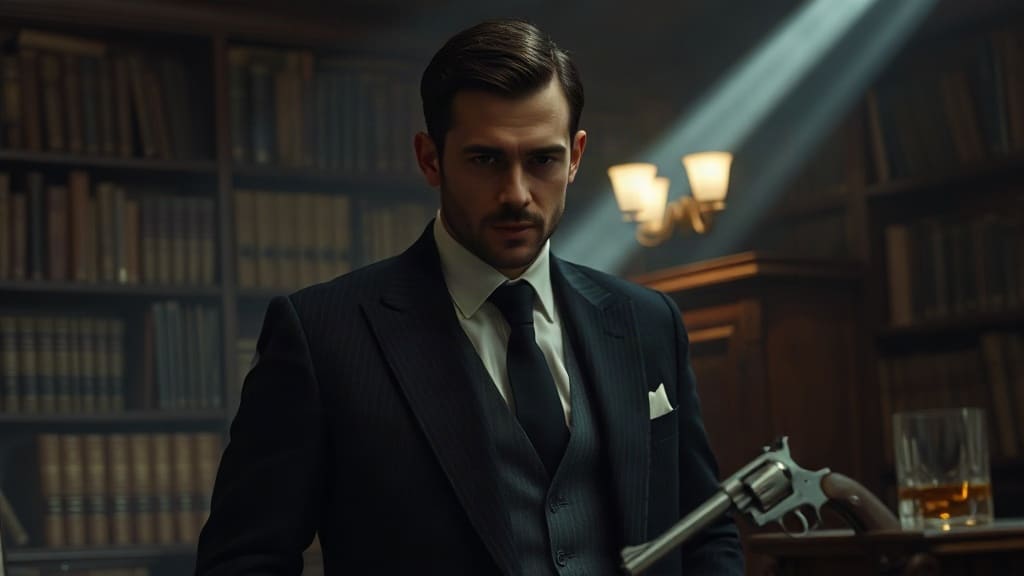
Two and a half years ago, Guy Ritchie invited audiences into the blood-soaked, Savile Row-suited world of The Gentlemen, a Netflix series that turned a sprawling country estate into a criminal chessboard. At its center was Eddie Horniman, played by Theo James, a reluctant aristocrat dragged into his family's weed empire. In Season 2, Eddie is no longer reluctant. He is transformed, and James steps into a role that feels ripped from the pages of a modern mob epic: a quiet, ruthless, and magnetic presence that recalls Al Pacino's Michael Corleone in The Godfather Part II. It is a commanding performance that elevates the entire series into something far more sinister and emotionally complex.
The new season wastes no time establishing Eddie's evolution. Gone is the man who stumbled into crime out of necessity. In his place is a calculating strategist who understands that power is not just about violence, but about patience, silence, and the ability to make others underestimate you. James plays Eddie with a stillness that is almost unnerving. His eyes do most of the work, conveying a cold assessment of every person in the room. When he does speak, his words are measured, each one landing with the weight of a verdict. It is a performance that thrives on restraint, and it is impossible to look away.
A Darker, More Sinister Chapter
If Season 1 was a stylish caper with bursts of brutal comedy, Season 2 is a slow-burn tragedy wrapped in designer clothing. The tone has shifted significantly. The humor is still there, but it is sharper and more bitter, often undercut by genuine tension. The violence, when it comes, is sudden and ugly, leaving a residue that the characters cannot simply shrug off. Ritchie seems less interested in the glamour of the criminal underworld and more in its corrosive effect on the soul. This is a show that now asks: what does it cost to become the monster everyone already thinks you are?
The supporting cast remains stellar. Kaya Scodelario's Susie Glass continues to be a formidable presence, and her dynamic with Eddie has evolved into something far more layered and dangerous. The two are no longer reluctant partners; they are two apex predators circling the same territory, each aware that the other could strike at any moment. Their scenes together crackle with unspoken threats and grudging respect. Daniel Ings, as Eddie's hapless brother Freddy, provides some much-needed comic relief, but even his antics are tinged with a new desperation. The ensemble is tighter, the stakes higher, and the show is better for it.
Theo James's Transformation
James has always been a charismatic actor, but here he finds a new depth. The physical transformation is subtle but effective: a slight stiffening of the posture, a wardrobe that grows darker and more severe, and a gaze that never quite warms. But the real change is internal. Eddie has learned that emotion is a liability, and James shows us the cost of that lesson in almost every scene. There is a moment in the second episode where Eddie makes a decision that will have devastating consequences, and James plays it with an almost imperceptible nod, a tiny surrender that speaks volumes. It is the kind of moment that separates good actors from great ones.
The Michael Corleone comparison is not accidental. Ritchie and James have clearly studied the architecture of that iconic character: the way power isolates, the way family becomes both motivation and prison, the way a man can lose himself in the pursuit of control. But Eddie is not a carbon copy. He is less tragic, more pragmatic, and in some ways more frightening. Michael Corleone was driven by a twisted sense of duty. Eddie is driven by something colder: the realization that he is good at this, and that he likes it. James never lets us forget that Eddie is a man who has made peace with his own darkness.
What Worked and What Didn't
The season is not without its flaws. The pacing can feel uneven in the middle episodes, as the show juggles multiple subplots that don't always pay off. Some of the new characters introduced feel underdeveloped, serving more as plot devices than as fully realized people. And there are moments when the show's trademark style threatens to overwhelm its substance. But these are minor quibbles in a season that otherwise delivers on its promise of a darker, more mature story. The final two episodes are a masterclass in tension, building to a climax that is both shocking and inevitable.
One of the season's greatest strengths is its willingness to sit with uncomfortable emotions. Eddie's relationships with his family, particularly his mother and his brother, are explored with a raw honesty that the first season only hinted at. The show understands that the real tragedy of Eddie's rise is not the enemies he makes, but the people he loses along the way. James plays these moments with a heartbreaking restraint, never allowing Eddie to fully break, but letting us see the cracks.
Final Verdict
The Gentlemen Season 2 is a triumph of tone and performance. It is darker, more sinister, and more emotionally resonant than its predecessor, and it gives Theo James the role of a lifetime. His Eddie Horniman is a villain we can't help but root for, even as we recoil from his choices. The show has evolved from a stylish diversion into a genuine character study, and it is all the better for it. Fans of the first season will find plenty to love, but newcomers may want to start from the beginning to fully appreciate the journey. Either way, this is television that demands your attention.
In a landscape crowded with crime dramas, The Gentlemen stands out by refusing to glamorize its subject matter. It shows us the cost of power, the weight of secrets, and the loneliness of the man at the top. And in Theo James, it has found an actor capable of carrying that weight with grace and menace. If this is his Michael Corleone era, we can only hope it lasts a little longer.
Frequently Asked Questions
Is The Gentlemen Season 2 darker than the first season?
Yes, Season 2 is noticeably darker and more sinister. The humor is still present but is undercut by a heavier emotional weight and more brutal violence. The show focuses more on the psychological toll of Eddie's choices, making it a more intense viewing experience.
Does Theo James really resemble Michael Corleone in this season?
Absolutely. Theo James's performance draws clear inspiration from Al Pacino's iconic role. Eddie's cold calculation, quiet menace, and gradual moral decay mirror Michael Corleone's arc, though Eddie remains a distinct and original character in his own right.
Do I need to watch Season 1 before Season 2?
While Season 2 does provide some context, it is highly recommended to watch Season 1 first. The character development and relationships are crucial to understanding Eddie's transformation and the stakes of the new season. Starting from the beginning will enhance your appreciation of the story.
Is the violence in Season 2 excessive?
The violence is more intense and less stylized than in Season 1, but it serves the story. It is sudden, ugly, and often has lasting consequences, reflecting the darker tone of the season. If you are sensitive to graphic violence, be aware that it is present but not gratuitous.
Will there be a Season 3 of The Gentlemen?
As of now, Netflix has not officially announced a third season. However, the ending of Season 2 leaves room for further storylines, and given the show's popularity, a renewal seems likely. Fans will have to wait for an official announcement.