
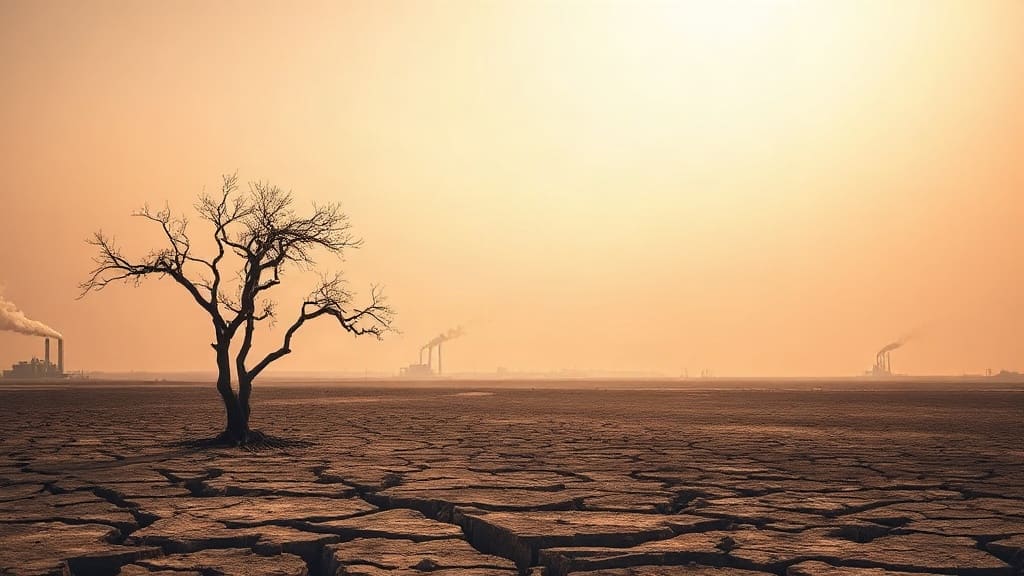
The world has been talking about the 1.5-degree Celsius climate target for years, but now the United Nations has delivered a sobering reality check: we are going to miss it. That is the blunt conclusion of the latest UN assessment, which warns that current national plans and policies are nowhere near enough to keep global warming within the threshold that scientists say is critical for avoiding the worst impacts of climate change. The target, enshrined in the Paris Agreement, was supposed to be the line in the sand. But the sand is shifting, and the tide is coming in faster than anyone expected.
So what does this actually mean? And why should anyone outside of climate policy circles care? The answer is simple: because missing the 1.5-degree target is not an abstract failure on a spreadsheet. It translates into more extreme heatwaves, longer droughts, fiercer storms, rising seas, and cascading disruptions to food, water, and economies. The UN's message is not that we should give up, but that the window for meaningful action is closing fast, and the consequences of inaction are becoming irreversible.
What the UN Actually Said
The UN's warning comes as part of its ongoing review of national climate pledges, known as Nationally Determined Contributions (NDCs). These are the plans each country submits outlining how it will reduce greenhouse gas emissions. The problem is that when you add up all the current NDCs, they still put the world on track for roughly 2.5 to 2.9 degrees Celsius of warming by the end of the century. That is nearly double the 1.5-degree goal, and even the lower end of that range would bring catastrophic changes.
The UN did not mince words. It said that the collective ambition of the world's governments is "woefully inadequate" and that the gap between what is needed and what is being done is growing, not shrinking. The report also highlighted a dangerous new concept being floated by some countries: the idea of "overshoot." This would involve allowing temperatures to temporarily exceed 1.5 degrees and then relying on future technologies to pull carbon dioxide back out of the atmosphere. The UN acknowledged this path but called it "highly uncertain" and fraught with risk. In other words, betting the planet on unproven carbon removal technologies is not a plan; it is a gamble.
Why 1.5 Degrees Matters More Than You Think
You might wonder why a half-degree difference between 1.5 and 2 degrees Celsius is such a big deal. After all, it sounds small. But in climate terms, that half-degree is enormous. Scientists have shown that at 1.5 degrees of warming, we would still see significant impacts, but many ecosystems and human systems could adapt. At 2 degrees, the risks multiply dramatically. Coral reefs, for example, would decline by 70 to 90 percent at 1.5 degrees, but at 2 degrees, virtually all of them would be lost. The number of people exposed to extreme heatwaves would more than double. Crop yields would fall more sharply, and the risk of triggering irreversible tipping points, like the collapse of the Greenland ice sheet, would rise sharply.
The 1.5-degree target is not just a political slogan. It is a scientifically grounded threshold for avoiding the most dangerous and destabilizing impacts of climate change. Missing it does not mean the world ends, but it means we are choosing a future where adaptation becomes harder, more expensive, and more painful for the most vulnerable people on the planet.
The Gap Between Promise and Action
One of the most frustrating aspects of the UN's warning is that it is not new. For years, scientists and activists have been sounding the alarm that national pledges are insufficient. What has changed is the tone. The UN is no longer using diplomatic language to gently encourage countries to do better. It is now stating plainly that the world is failing. The gap between what governments promise and what they actually deliver is a chasm, and it is widening.
Part of the problem is that many countries set ambitious long-term goals, like reaching net zero by 2050, but their near-term policies do not match. They build new coal plants while promising to phase them out. They subsidize fossil fuels while talking about renewable energy. They sign agreements but then delay implementation. The UN's message is that this disconnect is no longer acceptable. The time for vague promises is over; what matters now is concrete action, measured in megatons of carbon reduced and gigawatts of clean energy deployed.
The Overshoot Trap
The concept of "overshoot" deserves special attention because it is becoming a seductive escape hatch for countries that want to avoid making tough decisions now. The idea is that we can let temperatures rise above 1.5 degrees for a few decades, then use technology to suck carbon dioxide out of the air and bring temperatures back down. In theory, this sounds like a clever workaround. In reality, it is a dangerous fantasy.
The technologies needed to remove carbon at the scale required are nowhere near ready. Direct air capture machines are expensive, energy-intensive, and currently remove a tiny fraction of what would be needed. Reforestation can help, but there is only so much land available, and forests can burn or die, releasing their stored carbon. The UN is right to call this path "highly uncertain." Relying on overshoot is like planning to win the lottery to pay off your mortgage. It might happen, but you would be foolish to bet your future on it.
What Can Still Be Done
Despite the grim warning, the UN has not thrown in the towel. The report makes clear that every fraction of a degree matters, and that every ton of carbon dioxide avoided reduces future suffering. The solutions are well known: rapidly phase out coal, oil, and gas; massively scale up renewable energy; electrify transportation and heating; improve energy efficiency; protect and restore forests; and invest in climate resilience for the most vulnerable communities. None of this is easy, but all of it is possible with existing technology and sufficient political will.
The real barrier is not technical or economic; it is political. Fossil fuel interests have enormous power, and many politicians are reluctant to challenge them. But the UN's message is that the cost of inaction is far higher than the cost of action. Delaying only makes the transition more expensive and more disruptive. The world has the tools; what it lacks is the courage to use them.
A Wake-Up Call for Everyone
The UN's warning is not just for governments. It is a wake-up call for businesses, investors, cities, and individuals. The choices we make about how we generate energy, what we buy, how we travel, and what we eat all add up. No one person can solve climate change alone, but millions of people making better choices can shift markets and political priorities. The fossil fuel era is ending, whether we like it or not. The question is whether we manage the transition in a way that is fair and orderly, or whether we let chaos and crisis force it upon us.
Missing the 1.5-degree target is a failure of collective will, not a failure of possibility. The UN has laid out the facts. The path forward is clear. What remains is the decision to walk it. The world is standing at a crossroads, and the direction we choose now will determine the future for generations to come. The 1.5-degree target may be slipping away, but the fight for a livable planet is far from over.
Frequently Asked Questions
What does it mean that the world will miss the 1.5-degree climate target?
Missing the 1.5-degree target means that global average temperatures are projected to rise more than 1.5 degrees Celsius above pre-industrial levels. This threshold was set in the Paris Agreement because scientists determined that exceeding it would greatly increase the risks of severe climate impacts, such as more intense heatwaves, sea level rise, and loss of biodiversity.
Why is the 1.5-degree target so important?
The 1.5-degree target is considered a critical guardrail because even a small increase in temperature can lead to disproportionately larger impacts. At 1.5 degrees, some coral reefs may survive, but at 2 degrees, nearly all would be lost. Similarly, the number of people exposed to extreme heat and water scarcity would increase dramatically if we exceed 1.5 degrees.
What is the "overshoot" concept mentioned by the UN?
Overshoot refers to a scenario where global temperatures temporarily exceed the 1.5-degree target and then are brought back down later through the removal of carbon dioxide from the atmosphere. The UN has called this approach "highly uncertain" because the technologies needed to remove carbon at the required scale are not yet proven or available, and the impacts of overshoot could be irreversible.
Can we still limit warming to 1.5 degrees if we act now?
According to the UN, the window for limiting warming to 1.5 degrees is closing rapidly, but it is not yet completely shut. To have any chance, global emissions would need to be cut roughly in half by 2030 and reach net zero by 2050. This would require immediate, deep, and sustained reductions across all sectors, which current national plans do not achieve.
What can individuals do to help address climate change?
Individuals can contribute by reducing their own carbon footprint through actions such as using public transportation, eating less meat, conserving energy at home, and supporting policies and politicians that prioritize climate action. While individual actions alone are not enough, they can help shift social norms and create demand for systemic change.