
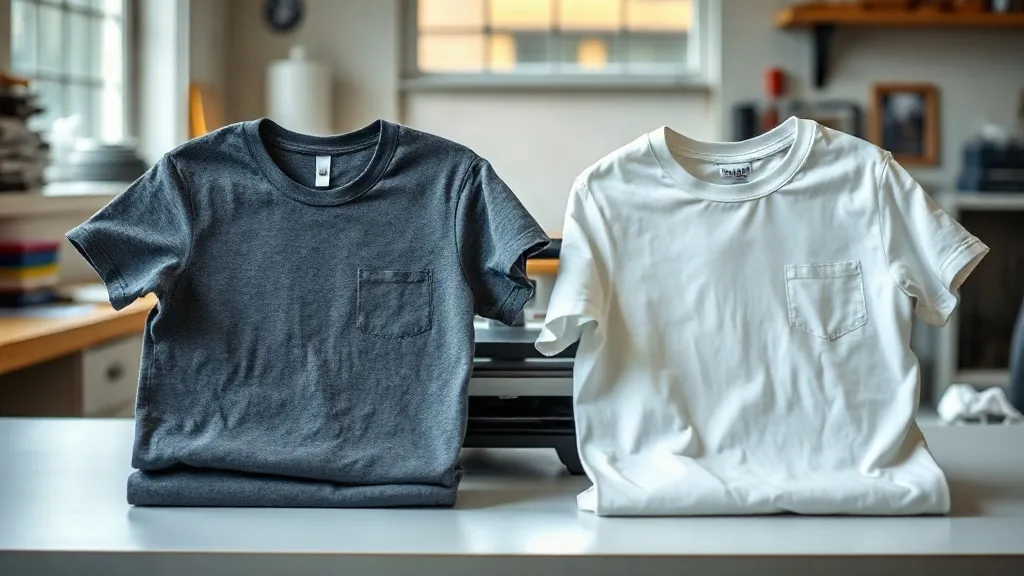
Walk into any print shop that handles DTF transfers, and you will hear the same conversation: which blank actually works? Two names keep coming up: shaka wear and smart blanks. Both are popular, both are affordable, and both claim to be print-friendly. But they are not interchangeable. The choice affects how your transfers adhere, how the shirt feels, and how your customer reacts when they open the package. I have printed on both for months, and this breakdown covers the differences that matter when you are building a custom apparel line.
The short answer: it depends on your print method and your customer
If you want a heavyweight, streetwear-ready tee that holds up to daily wear and takes a DTF transfer without fuss, shaka wear is the safer bet. If you need a budget-friendly option for large orders, samples, or lightweight summer pieces, smart blanks offers surprising quality for the price. The rest of this guide digs into the details so you can match the blank to the job.
Fabric and construction: what you feel matters
Shaka Wear blanks are typically 100% cotton, with a substantial hand feel. The 7.5 oz heavyweight tee, for example, has a dense knit that resists stretching and holds its shape after repeated washes. That weight matters for DTF because a stable fabric surface helps the transfer adhesive bond evenly. Lighter, looser knits can shift during pressing, leading to wrinkles or partial adhesion.
Smart Blanks, by contrast, focus on value and softness. Many styles use a cotton-poly blend or a lighter 100% cotton jersey. The fabric is softer out of the bag, which appeals to customers who want a retail-soft feel. But that softness comes with a trade-off: lighter fabrics can be more prone to showing texture through the transfer, especially with large, solid-color designs.
Weight and drape
Shaka Wear tends to drape with structure. It hangs straight and holds its shape, which suits boxy fits and oversized cuts. Smart Blanks drape more fluidly, so they work well for fitted or relaxed styles where movement is part of the look. If your design relies on a crisp, flat print area, the heavier Shaka Wear canvas gives you more consistency.
Print performance with DTF transfers
DTF transfers need a smooth, stable surface and consistent heat and pressure. I tested both blanks with the same transfer sheets, using a heat press at 320°F for 15 seconds with medium pressure. Here is what I observed:
- Shaka Wear: Transfers adhered fully on the first press. The heavier fabric absorbed pressure evenly, and the print edges stayed sharp after peeling. After five washes, no cracking or lifting.
- Smart Blanks: The first press worked, but on lighter styles I needed a slightly longer press or a second pass to get full adhesion around the edges. After washing, some minor fading appeared on darker colors, though no peeling.
That does not mean Smart Blanks are bad for DTF. It means you need to adjust your process. A heat press with accurate temperature control and a firm silicone pad helps. If you are using a home iron or a low-pressure press, the heavier Shaka Wear blank is more forgiving.
Color and opacity
Both blanks take white ink well, but Shaka Wear's tighter knit prevents the fabric texture from showing through the print. On Smart Blanks, very thin or stretchy fabrics may require a white underbase or a double-layer transfer for solid colors. If your design has fine details or small text, the smoother surface of Shaka Wear gives you cleaner lines.
Fit and sizing: who are you dressing?
Shaka Wear is known for its streetwear-oriented fits: boxy, slightly cropped, and generous through the chest and shoulders. The size run often includes extended sizes, which is a plus for inclusive lines. Smart Blanks lean toward classic retail fits: standard crew necks, regular sleeves, and a more traditional length. If your audience expects a modern, oversized look, Shaka Wear aligns better. If you are printing uniforms, team shirts, or promotional giveaways, Smart Blanks' conventional fit may be more appropriate.
Pricing and minimums
Smart Blanks generally come in at a lower unit cost, especially on bulk orders. That makes them attractive for high-volume projects where margin is tight. Shaka Wear sits a step above on price, but the difference is often small when you factor in fewer misprints and less waste. For a small brand selling at premium prices, the extra cost per blank is easy to absorb. For a large event giving away shirts, Smart Blanks keeps the budget in check.
Durability and wash testing
I washed both shirts five times in cold water and tumble dried on low. Shaka Wear showed minimal shrinkage and no visible wear at the seams. Smart Blanks showed slight shrinkage (about 3-5% on the cotton styles) and some softening of the fabric, which is expected. The DTF prints on Shaka Wear remained vibrant, while Smart Blanks prints faded slightly on the darkest colors. Neither showed cracking, but the Shaka Wear prints looked newer after the same number of washes.
When to choose Shaka Wear
- Your brand leans streetwear, skate, or oversized aesthetics.
- You need consistent DTF adhesion with minimal process tweaking.
- You want a heavyweight tee that feels premium and holds its shape.
- You are selling at a higher price point and need a blank that justifies it.
When to choose Smart Blanks
- You are producing large quantities on a tight budget.
- You need lightweight, soft blanks for summer or fitness apparel.
- Your designs are simple and do not require ultra-fine detail.
- You are printing samples or testing a new design before scaling.
Mixing both in one line
You do not have to pick just one. Many successful small brands use Shaka Wear for their core heavyweight tees and Smart Blanks for lighter seasonal pieces or lower-priced entry items. This strategy lets you offer variety without overcomplicating your supply chain. Just be sure to adjust your DTF press settings for each fabric weight and test before committing to a full run.
Frequently asked questions
Can I use DTF transfers on both Shaka Wear and Smart Blanks?
Yes. Both blanks accept DTF transfers well. Shaka Wear requires less adjustment because its heavier, tighter knit provides a stable surface. Smart Blanks may need a slightly longer press or a second pass on lighter styles, but with proper temperature and pressure, the results are durable.
Which blank is better for oversized fits?
Shaka Wear is the better choice for oversized fits. Its cuts are intentionally boxy and generous, and the heavier fabric holds the shape without clinging. Smart Blanks offer more standard fits, so you would need to size up for an oversized look, which may affect proportions.
Do Smart Blanks shrink after washing?
Smart Blanks cotton styles may shrink about 3-5% after the first wash, especially if dried on medium heat. Shaka Wear blanks are pre-shrunk and show minimal shrinkage. Always wash in cold water and tumble dry low to preserve fit and print quality.
Is Shaka Wear worth the higher price?
For premium or streetwear-focused lines, yes. The heavier fabric, consistent print performance, and durability reduce waste and returns. For high-volume promotional orders where cost per unit is critical, Smart Blanks offers better value.
Can I mix Shaka Wear and Smart Blanks in the same order?
Absolutely. Many brands use both for different product tiers. Just test your DTF settings on each fabric and keep your wash instructions consistent. Mixing blanks is a practical way to balance quality and budget across your catalog.