
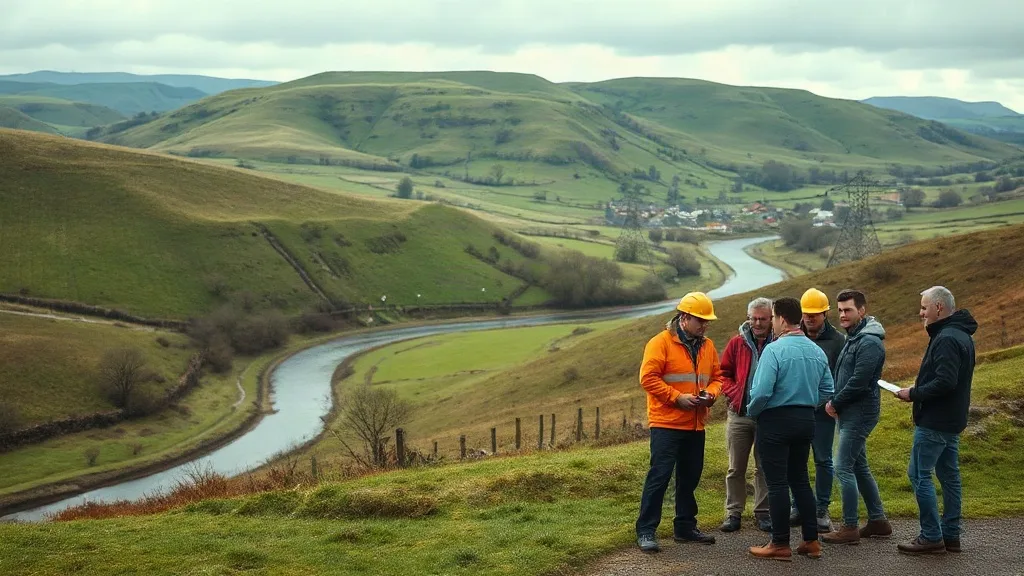
Steel pylons have long been a defining feature of the British countryside, carrying power across hills and valleys. But in Wales, that familiar silhouette may soon become a rarity. The Welsh government has launched a consultation on an "undergrounding-first approach" to electricity lines, a move that could effectively ban new steel pylons in many areas. The proposal marks a significant shift in how energy infrastructure is planned, with implications for landscapes, costs, and the transition to net zero.
What the Consultation Proposes
The consultation, announced by the Welsh government, seeks views on a new planning framework that would prioritize burying new electricity lines underground rather than erecting overhead pylons. The "undergrounding-first" principle means that developers would need to demonstrate why undergrounding is not feasible before considering overhead options. This could lead to a de facto ban on new steel pylons in sensitive areas, particularly national parks and Areas of Outstanding Natural Beauty.
While the exact scope is still being consulted on, the Welsh government has indicated that the approach would apply to new transmission and distribution projects. Existing pylons would not be affected, at least initially, but the long-term vision may include replacing some overhead lines with underground cables. The consultation is open for public responses, with a closing date expected later this year.
Why Wales Is Taking This Step
Wales is known for its dramatic landscapes, from the mountains of Snowdonia to the rolling hills of the Brecon Beacons. These areas are not only important for tourism but also hold cultural and ecological significance. Overhead power lines have often been criticized for scarring these vistas and disrupting wildlife habitats.
In recent years, proposals for new pylons have met with strong local opposition. For example, plans to upgrade the electricity network in mid-Wales sparked protests from residents and environmental groups who argued that the infrastructure would damage the landscape. The Welsh government has responded by exploring alternatives, and undergrounding is seen as a way to balance the need for energy infrastructure with environmental protection.
The move also aligns with broader environmental goals. Burying power lines can reduce the risk of wildfires and minimize impact on bird populations. However, it comes with its own set of challenges.
The Trade-offs: Cost, Engineering, and Environment
Undergrounding electricity lines is not a simple swap. It is significantly more expensive than overhead pylons, often costing several times more per mile. The higher cost is due to the need for excavation, specialized cables, and additional infrastructure such as substations. These costs are typically passed on to consumers through energy bills, raising concerns about affordability.
Engineering challenges are also considerable. Underground cables require careful planning to avoid disturbing archaeological sites, watercourses, and existing underground utilities. They also generate more heat and require cooling systems, which can be complex in rural areas. Furthermore, repairing faults in underground cables can be more time-consuming and costly than fixing overhead lines.
From an environmental perspective, undergrounding can reduce visual impact but may increase the carbon footprint during construction due to the use of heavy machinery and materials. The net environmental benefit depends on factors such as the local ecosystem and the source of electricity.
What It Means for Energy Infrastructure and Net Zero
The UK is aiming for net zero emissions by 2050, and Wales has its own ambitious targets. Achieving these goals will require a massive expansion of renewable energy, much of which will be generated in rural areas and transported to population centres. This means more power lines, not fewer.
If Wales adopts an undergrounding-first approach, it could slow down the pace of grid upgrades due to higher costs and longer construction times. That could jeopardize the timely connection of new wind and solar farms, potentially delaying the transition to clean energy. On the other hand, it might encourage more localized energy generation and storage, reducing the need for long-distance transmission.
The consultation will need to strike a balance between protecting landscapes and ensuring that the grid can support a low-carbon future. The outcome could set a precedent for other parts of the UK, where similar debates are ongoing.
Reactions from Stakeholders
Environmental groups have largely welcomed the consultation, seeing it as a victory for landscape protection. However, some argue that undergrounding should be mandatory only in the most sensitive areas, not as a blanket policy. Energy companies have expressed concerns about the cost and practicality, warning that it could lead to higher bills and delays in infrastructure projects.
Local communities are divided. While many oppose new pylons, some worry that underground cables could still disrupt their areas during construction and may not be completely invisible. The consultation will need to address these concerns through transparent planning and community engagement.
What Happens Next
The consultation is a first step. If the Welsh government decides to proceed, it will need to develop detailed planning guidance and possibly new legislation. The process is likely to take several years, and the outcome will depend on the responses received. For now, the proposal signals a clear direction of travel: a Wales where the skyline is free from new steel giants.
Frequently Asked Questions
Will existing pylons be removed?
The consultation focuses on new electricity lines. Existing pylons are not currently slated for removal, though the government has not ruled out future reviews. Any removal would be a separate process and likely very costly.
How much will this cost consumers?
Undergrounding is more expensive than overhead lines, and those costs are typically recovered through energy bills. The exact impact depends on how many projects are affected and the final policy design. The consultation may include measures to mitigate cost impacts.
Does undergrounding harm the environment?
It can have both positive and negative effects. While it reduces visual impact and risks to birds, construction can disturb soil and habitats. The overall impact depends on careful planning and mitigation measures.
Can I respond to the consultation?
Yes, the consultation is open to the public. Details on how to respond are available on the Welsh government website. Responses are typically accepted via an online form or by email.
How does this affect renewable energy projects?
It could delay or increase the cost of connecting new renewable energy projects to the grid. However, it may also encourage more localized generation and storage, which could reduce the need for long-distance transmission.