
When Saab announced a tripling of its order intake in the first quarter, the headline number was striking. But the real story lies beneath the surface: a continent rearming, a fighter jet order that could redefine Sweden's role in European defense, and a company that suddenly finds itself at the center of a geopolitical shift. The Swedish defense giant's fortunes have turned dramatically, and the ripple effects are only beginning to be felt.
The Deal That Changed the Game
At the heart of Saab's order surge is the Gripen fighter jet deal with Ukraine. While the exact terms remain under negotiation, the agreement signals a long-term commitment to supply Ukraine with Saab's flagship multirole aircraft. For a company that has long punched above its weight in defense exports, this is a watershed moment. The Gripen, known for its cost-effectiveness and adaptability, has struggled to break into markets dominated by American and French rivals. Ukraine's endorsement could open doors that were previously closed.
The timing is no coincidence. European governments, rattled by Russia's aggression, are racing to turn defense spending pledges into actual military capability. This urgency is translating into orders for everything from ammunition to advanced fighter jets. Saab, with its diverse portfolio spanning aeronautics, land systems, and naval equipment, is well-positioned to capture a significant share of this spending wave.
Why the Gripen Matters
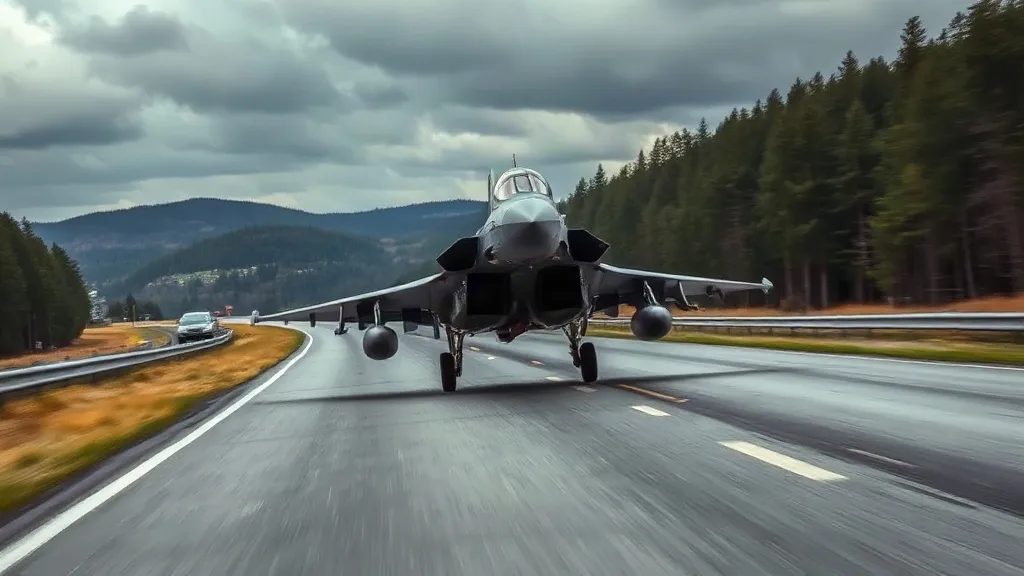
The Gripen is not just another fighter jet. It is designed for dispersed operations, capable of taking off from short runways and even highways, a feature that has caught the eye of military planners in Eastern Europe. Its lower operating cost compared to the F-35 and Eurofighter Typhoon makes it an attractive option for air forces with limited budgets. Ukraine's decision to acquire the Gripen, even as it receives F-16s from Western allies, underscores the aircraft's unique value proposition.
For Saab, the deal is a validation of decades of investment in a platform that has often been overshadowed by larger competitors. It also provides a springboard for future exports. Countries like the Czech Republic, Hungary, and South Africa already operate the Gripen, but the Ukraine deal could persuade others to follow suit. The order intake tripling is a clear signal that Saab's strategy is paying off.
The Broader Defense Spending Surge
Saab's success is not an isolated phenomenon. Across Europe, defense budgets are expanding at a pace not seen since the Cold War. Germany's Zeitenwende, France's military programming law, and Poland's massive procurement drive are all part of a broader trend. NATO members are under pressure to meet the 2% GDP spending target, and many are going further. This environment creates a favorable backdrop for defense contractors.
Yet not all companies are benefiting equally. The surge in orders is concentrated among those with proven products and the capacity to deliver quickly. Saab's ability to ramp up production and its reputation for reliability have given it an edge. The company's order book, which includes everything from the Gripen to the Carl-Gustaf weapon system and the GlobalEye surveillance aircraft, is diversified enough to weather shifts in demand.
Challenges on the Horizon
Despite the optimistic headlines, challenges remain. Scaling up production to meet new orders is not without risk. Supply chain constraints, skilled labor shortages, and the need for long-term investment in manufacturing facilities could strain Saab's resources. The company has already announced plans to expand capacity, but these efforts take time. Moreover, the geopolitical situation is fluid. A change in the conflict's trajectory or a shift in political priorities could alter the demand picture.
There is also the question of competition. American defense giants like Lockheed Martin and Raytheon are also vying for European contracts, and they have deeper pockets and larger production capacities. European governments, keen to support domestic industry, may favor local suppliers. Saab's advantage lies in its niche expertise and its ability to offer competitive pricing, but it cannot afford to be complacent.
What This Means for Investors and the Industry
For investors, Saab's tripling of orders is a clear positive signal. The company's stock has responded favorably, and analysts are revising their forecasts upward. However, the defense sector is notoriously cyclical, and the current boom is driven by exceptional circumstances. Investors would do well to look beyond the headline numbers and consider the long-term fundamentals: Saab's ability to execute on its orders, manage costs, and maintain its technological edge.
For the broader industry, the Saab story is a reminder that defense is no longer a backwater. The sector is attracting talent, capital, and political attention in ways not seen in decades. This could lead to innovation and consolidation as companies seek to scale. It also raises ethical questions about the role of arms manufacturers in society, questions that are unlikely to fade even as the security environment demands more defense spending.
The Ukraine Factor
Ukraine's role in this narrative cannot be overstated. The country's resistance against Russia has galvanized European public opinion and political will. The Gripen deal is a tangible expression of that support, but it is also a commercial opportunity for Saab. By aligning itself with Ukraine's defense needs, Saab has positioned itself as a partner in Europe's security architecture. This could yield dividends for years to come, as Ukraine rebuilds its air force and integrates more closely with Western defense structures.
At the same time, the deal carries risks. Ukraine's ability to pay for the aircraft is uncertain, and the delivery timeline could be affected by the ongoing conflict. Saab and its partners will need to navigate these challenges carefully. But for now, the order surge is a vote of confidence in Saab's products and its future.
Frequently Asked Questions
What exactly is the Gripen fighter jet deal with Ukraine?
The deal involves Saab supplying Gripen fighter jets to Ukraine, although the specific number and delivery schedule have not been finalized. It represents a significant endorsement of the aircraft and a long-term partnership between Sweden and Ukraine.
How much did Saab's orders increase?
Saab reported that its order intake tripled in the first quarter compared to the same period last year. The exact figures were not disclosed in the source summary, but the increase is substantial and driven by multiple contracts, including the Gripen deal.
Why are European defense companies seeing such strong demand?
European governments are increasing defense spending in response to security concerns, particularly Russia's invasion of Ukraine. This has led to a surge in orders for military equipment, benefiting companies like Saab that have competitive products and production capacity.
What are the risks for Saab despite the order surge?
Saab faces challenges in scaling up production, managing supply chains, and competing with larger defense contractors. The sustainability of the order boom depends on geopolitical developments and government budget priorities.
How does this affect Sweden's defense industry?
The Gripen deal and Saab's order surge enhance Sweden's reputation as a defense exporter and strengthen its defense industrial base. It could lead to increased investment and collaboration with other European countries.