
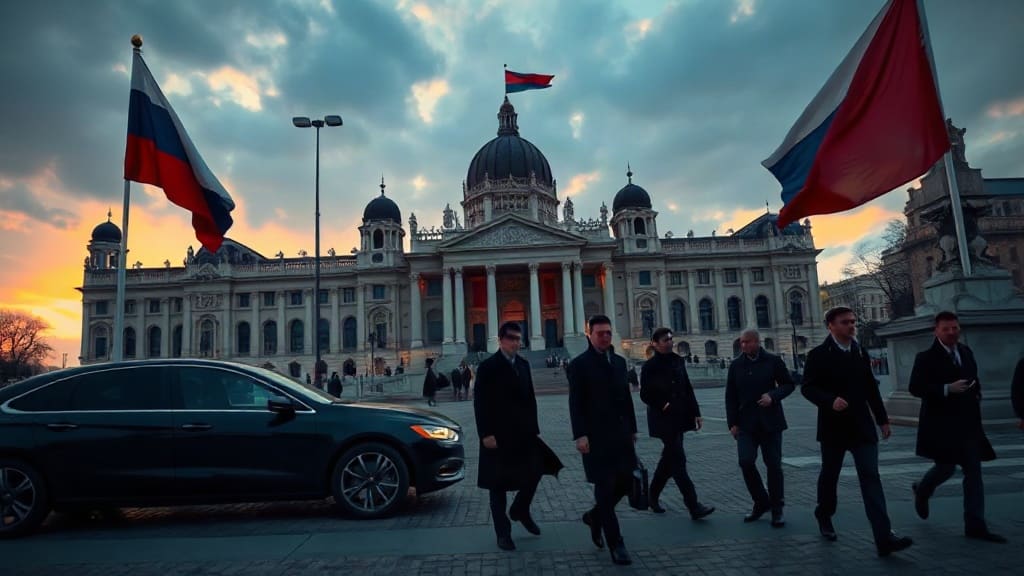
When Hungary abruptly expelled ten Russian diplomats on Monday, the move sent a clear signal that even Moscow's closest allies in the European Union are losing patience. The Kremlin's response was swift and ominous: a promise of a harsh and painful reaction. This latest escalation is not just a bilateral spat. It is a crack in the fragile facade of European unity and a reminder that the war in Ukraine continues to reshape alliances in unpredictable ways.
What Exactly Happened Between Hungary and Russia?
The Hungarian government announced that it had declared ten Russian diplomats persona non grata, giving them a limited window to leave the country. The official explanation was that their activities were incompatible with their diplomatic status, a phrase that typically points to espionage. Budapest did not provide specific details, but the timing is significant. Hungary has long been seen as the EU's most Russia-friendly member, with Prime Minister Viktor Orbán maintaining close ties to Vladimir Putin. For Budapest to take such a step suggests that even its patience has worn thin, or that it faced overwhelming pressure from its Western partners.
Russia's foreign ministry did not take the expulsion lightly. In a statement, Moscow accused the Russophobic lobby in Budapest of orchestrating the move and warned that the response would be both harsh and painful. This language is not new; the Kremlin often uses such threats to signal that it will retaliate in kind, typically with tit-for-tat expulsions. However, the intensity of the wording indicates that Russia views this as a particularly sharp betrayal from a country it considered a friend.
Why Hungary's Move Matters More Than You Think
Hungary's relationship with Russia has been a thorn in the side of EU unity since the war began. While most EU members have imposed sanctions and sent military aid to Ukraine, Hungary has repeatedly blocked or watered down measures. Orbán has criticized sanctions as harmful to European economies and has maintained energy deals with Russia. He has also used his veto power to delay EU support packages for Ukraine, frustrating leaders in Brussels and Washington.
Given this history, the expulsion of Russian diplomats is a dramatic reversal. It could indicate that Hungary is finally aligning more closely with the broader EU consensus, perhaps under pressure from the United States or in response to internal political calculations. Alternatively, it might be a calculated move to extract concessions from Russia on energy prices or other bilateral issues. Either way, it signals that even Moscow's traditional allies are reassessing the risks of being too close to the Kremlin.
The Kremlin's 'Harsh and Painful' Response: What Could It Look Like?
Russia has a well-worn playbook for responding to diplomatic expulsions. Typically, it responds in kind by expelling the same number of diplomats from the offending country. This has happened repeatedly in the past decade, with the US, UK, and many EU states. A tit-for-tat expulsion of ten Hungarian diplomats from Moscow would be the most likely immediate response. But the Kremlin's threat of something more harsh and painful raises the stakes.
Could Russia go beyond expulsions? It might target Hungarian economic interests, particularly in the energy sector. Hungary is heavily dependent on Russian natural gas and oil, and any disruption would be painful for its economy. Russia could also use its influence in the Western Balkans to stir instability near Hungary's borders. Or it could launch a disinformation campaign aimed at destabilizing Orbán's government. While none of these actions would be unprecedented, the combination could create serious headaches for Budapest.
There is also the possibility that Russia will use this incident as a pretext to further isolate itself from Europe, painting Hungary as a victim of Western pressure. This narrative could bolster domestic support in Russia and among its remaining allies, while making it harder for Hungary to maintain its delicate balancing act.
How Does This Fit Into the Wider Ukraine War?
The expulsion comes at a critical moment in the war. Russian forces have been making slow but steady gains in eastern Ukraine, and the Kremlin has been projecting confidence. Just days before the expulsion, Kremlin spokesperson Dmitry Peskov told reporters that Russia was very confident that victory is very near. This kind of rhetoric is designed to boost morale at home and signal to the West that Russia is prepared for a long war. But it also reflects a genuine belief in Moscow that time is on its side.
Against this backdrop, the Hungary-Russia spat is a reminder that the war is not just about territory. It is a broader struggle for influence in Europe. Russia wants to weaken the EU and NATO, and it sees countries like Hungary as potential weak links. If Hungary starts to drift away from Russia, it undermines Moscow's strategy of dividing the West. That is why the Kremlin's response is likely to be so aggressive: it cannot afford to lose one of its few footholds inside the EU.
At the same time, Hungary's move could embolden other EU members to take a harder line against Russian diplomatic presence. There are still hundreds of Russian diplomats across Europe, and many Western intelligence agencies believe that a significant number are spies. If more countries follow Hungary's lead, it could significantly degrade Russia's espionage capabilities in Europe.
The Orbán Factor: A Shift or a Blip?
Viktor Orbán is a master of political survival. He has managed to maintain power for over a decade by appealing to nationalist sentiment and positioning himself as a defender of Hungarian sovereignty against Brussels. His friendship with Putin has been a key part of this image, allowing him to present himself as a pragmatic leader who puts Hungarian interests first. But that image is now under strain.
Domestically, Orbán faces a challenging economic situation, with high inflation and a weak currency. His government has been criticized for corruption and democratic backsliding, and the EU has frozen billions in funds over rule-of-law concerns. Aligning more closely with the West on Russia could help unlock some of that money and ease economic pressures. It could also improve his standing with the Biden administration, which has been openly critical of his authoritarian tendencies.
But Orbán is unlikely to make a clean break with Moscow. He still needs Russian energy, and his political brand depends on being seen as a maverick who defies the EU consensus. More likely, he will try to have it both ways: expelling diplomats to satisfy Western demands while continuing to engage with Russia on economic matters. Whether that balancing act can survive Moscow's promised harsh response remains to be seen.
What Does This Mean for Europe's Security?
The expulsion of Russian diplomats is part of a broader pattern of espionage and counter-espionage that has intensified since the war began. European security services have been on high alert, uncovering numerous spy rings and expelling hundreds of Russian officials. This is not just about protecting secrets; it is about sending a message that Europe will not tolerate hostile activities on its soil.
But the Hungary case is different because of Budapest's traditionally close ties to Moscow. It suggests that even countries with friendly relations are now willing to take action when they perceive a threat. That is a significant shift. It could lead to a more coordinated European approach to Russian espionage, which would be a major blow to Moscow's intelligence operations.
At the same time, there is a risk of escalation. Russia has a history of using diplomatic expulsions as a pretext for other hostile actions, from cyberattacks to disinformation campaigns. If the Kremlin follows through on its threat of a harsh and painful response, it could target Hungary's critical infrastructure or financial systems. European leaders will need to be prepared for such contingencies and stand ready to support Hungary if it comes under attack.
Conclusion: A Dangerous Game of Diplomatic Chess
The expulsion of ten Russian diplomats by Hungary is more than a routine diplomatic tit-for-tat. It is a signal that the geopolitical landscape in Europe is shifting, and that even Russia's friends are questioning the costs of that friendship. Moscow's threat of a harsh and painful response is a reminder that the Kremlin does not take such slights lightly. The coming weeks will show whether this is a one-off incident or the beginning of a broader realignment. For now, Europe watches and waits, knowing that the next move in this dangerous game of diplomatic chess could come at any moment.
Frequently Asked Questions
Why did Hungary expel Russian diplomats?
Hungary expelled ten Russian diplomats because their activities were deemed incompatible with their diplomatic status, which usually points to espionage. The exact details have not been disclosed, but the move is seen as a significant shift for a country that has been one of Russia's closest allies in the EU.
What does Russia mean by a 'harsh and painful' response?
Russia's threat of a harsh and painful response suggests it will retaliate in a way that goes beyond the usual tit-for-tat expulsions. This could include economic measures, particularly in the energy sector, or other forms of pressure aimed at hurting Hungary's interests.
How does this affect Hungary's relationship with the EU?
Hungary's decision to expel Russian diplomats could improve its standing with the EU, which has been frustrated by Budapest's pro-Russia stance. It might help unlock frozen EU funds and ease tensions with other member states, but it also risks angering Moscow and complicating Hungary's energy security.
Will other European countries follow Hungary's example?
It is possible. Many European countries have already expelled Russian diplomats, and Hungary's move could encourage others to do the same. A coordinated effort to reduce Russia's diplomatic presence in Europe would significantly hamper its espionage capabilities.
Is this a sign that Hungary is abandoning its pro-Russia stance?
Not necessarily. Hungary's Prime Minister Viktor Orbán is likely trying to balance Western pressure with his country's dependence on Russian energy. The expulsion may be a tactical move rather than a fundamental shift in policy. Orbán will probably continue to engage with Russia on economic issues while taking steps to appease his Western partners.