
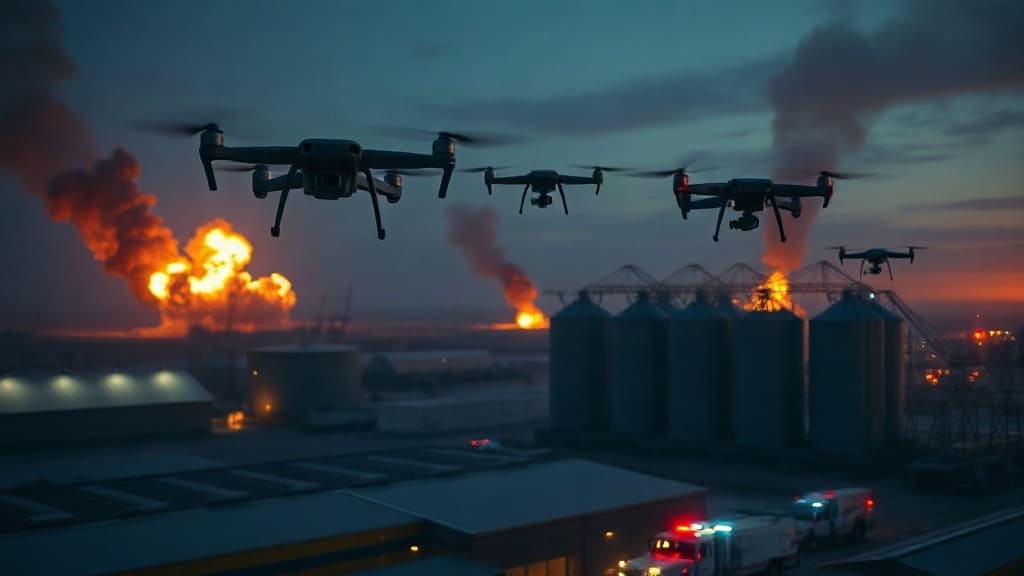
The overnight drone assault on Ukrainian port and warehouse infrastructure has once again brought the war's brutal reality into sharp focus. At least nine people were killed when Russian forces targeted critical logistics hubs, dealing another blow to a country already grappling with the immense human and economic toll of the conflict. The strikes, which hit facilities vital for grain exports and civilian supply chains, serve as a stark reminder that even far from the front lines, the war continues to exact a devastating price.
What Happened in the Latest Drone Strikes?
Ukrainian authorities reported that Russian drones struck multiple locations across the country, focusing on ports and warehouses that are essential for storing and shipping goods, particularly agricultural products. The attacks resulted in at least nine confirmed deaths, with several others injured. Emergency services worked through the night to contain fires and rescue survivors from the rubble. The precise number of drones involved and the full extent of the damage are still being assessed, but early reports indicate significant destruction to infrastructure that is crucial for Ukraine's economy and global food security.
The strikes were not isolated incidents. They are part of a sustained campaign by Russian forces to disrupt Ukraine's ability to export grain and other commodities, a strategy that has drawn international condemnation for its impact on global food prices and supply chains. By targeting ports and warehouses, Russia is effectively weaponizing hunger, using drones to destroy the very facilities that allow Ukraine to feed millions of people around the world.
Why Are Ports and Warehouses Being Targeted?
The targeting of Ukrainian port infrastructure is not new, but the intensity and frequency of these attacks have increased in recent months. Ukraine is one of the world's largest exporters of grain, sunflower oil, and other agricultural products. Before the war, the country supplied about 10% of the world's wheat and 15% of its corn. Disrupting these exports has a ripple effect on global markets, driving up food prices and exacerbating hunger in vulnerable regions.
Russia's strategy appears twofold: first, to weaken Ukraine's economy by destroying its ability to generate revenue from exports; second, to create leverage in negotiations by threatening global food security. By hitting warehouses and ports, Moscow aims to demonstrate that it can choke off Ukraine's lifelines at will, forcing Kyiv and its allies to make concessions. The psychological impact on Ukrainian farmers and exporters is equally significant, as they face the constant risk of losing their livelihoods overnight.
The Human Cost Beyond the Numbers
Behind the statistics are real people whose lives have been shattered. Warehouse workers, port employees, and truck drivers are among the victims, ordinary citizens who were simply doing their jobs when the drones struck. The loss of life is a tragedy that extends far beyond the immediate casualties. Families are left grieving, communities are traumatized, and the fear of further attacks hangs over everyone involved in the logistics sector.
One survivor, a warehouse manager in the Odesa region, described the moment the drones hit. "We heard the buzzing sound, and then everything shook," he said. "The building collapsed around us. I managed to pull two of my colleagues out, but we couldn't save everyone." Such stories are becoming all too common as the war grinds on, with civilians bearing the brunt of a conflict that shows no signs of ending soon.
Impact on Global Food Security
The strikes on Ukrainian ports and warehouses have far-reaching consequences beyond the country's borders. Ukraine's grain exports are a critical component of the global food supply chain, particularly for countries in Africa, the Middle East, and Asia. When these exports are disrupted, prices spike, and food becomes scarce in regions that can least afford it.
In 2022, the Black Sea Grain Initiative, brokered by the United Nations and Turkey, allowed Ukraine to resume some exports despite the war. However, Russia withdrew from the deal in 2023, and since then, Ukraine has relied on alternative routes, including river ports and overland transport. These routes are more vulnerable to attack, and the latest strikes underscore the fragility of the current system.
The international community has condemned the attacks, but condemnation alone has not stopped them. Western nations have provided air defense systems to Ukraine, but the sheer volume of drones and missiles launched by Russia makes it difficult to protect every critical site. As a result, Ukraine is forced to constantly adapt its logistics operations, moving goods at night, dispersing storage facilities, and using decoys to confuse Russian targeting systems.
Broader Security Concerns in Europe
The drone strikes are not just a Ukrainian problem; they are a European security concern. The war in Ukraine has already spilled over into neighboring countries, with drones and missiles occasionally landing in Poland, Romania, and Moldova. The latest attacks serve as a reminder that the conflict could escalate further, drawing NATO members into direct confrontation with Russia.
European leaders have been vocal in their support for Ukraine, but there is growing fatigue among some populations as the war drags on. The economic costs, energy prices, and the influx of refugees have strained resources across the continent. Yet, as these attacks demonstrate, the alternative to supporting Ukraine is a world where Russia feels emboldened to use force to achieve its goals, a prospect that would destabilize the entire region.
The Role of Air Defense Systems
Ukraine's ability to defend against drone attacks has improved significantly since the start of the war, thanks to Western-supplied systems like the Patriot, NASAMS, and IRIS-T. However, the country faces a constant challenge in covering its vast territory, especially areas far from the front lines. Drones are relatively cheap and can be launched in large numbers, overwhelming even sophisticated defenses.
Ukrainian officials have called for more air defense systems and ammunition, arguing that every successful interception saves lives and infrastructure. The latest strikes highlight the urgent need for continued military support, as well as innovative solutions to counter the drone threat, such as electronic warfare systems and drone-on-drone interception technologies.
What Comes Next?
As Ukraine assesses the damage from the latest strikes, attention will turn to how the international community responds. There have been calls for increased sanctions on Russia, particularly targeting its ability to produce and acquire drones. Iran has been a key supplier of drones to Russia, and Western nations have imposed sanctions on Iranian entities involved in the trade. However, enforcement has been inconsistent, and Russia has reportedly begun producing its own drones domestically.
For Ukraine, the immediate priority is to repair the damaged infrastructure and resume operations as quickly as possible. The country's resilience has been remarkable, but each attack takes a toll. The psychological impact on workers and the financial burden of rebuilding are significant, and there is a limit to how much damage can be absorbed.
In the longer term, the war in Ukraine is likely to continue shaping European security dynamics for years to come. The drone strikes on ports and warehouses are a symptom of a larger struggle for control over resources, territory, and influence. As long as the conflict persists, the risk of further escalation and civilian casualties will remain.
Frequently Asked Questions
How many people were killed in the latest Russian drone strikes on Ukraine?
At least nine people were killed in the strikes targeting ports and warehouses. The number may rise as search and rescue operations continue.
Why is Russia targeting Ukrainian ports and warehouses?
Russia is targeting these facilities to disrupt Ukraine's grain exports and weaken its economy. The attacks also aim to pressure Ukraine and its allies by threatening global food security.
What impact do these strikes have on global food prices?
The strikes disrupt the supply of Ukrainian grain, which is a major source of wheat and corn for many countries. This can lead to higher food prices and shortages, particularly in developing nations that rely on imports.
How is Ukraine defending against drone attacks?
Ukraine uses a combination of Western-supplied air defense systems, electronic warfare, and other countermeasures to intercept drones. However, the volume of attacks makes it difficult to protect all critical infrastructure.
What can the international community do to help?
The international community can provide more air defense systems, impose stricter sanctions on Russia and its suppliers, and support Ukraine's efforts to repair and protect its infrastructure. Diplomatic pressure on Russia to end the attacks is also crucial.